
Race, Identity & Beyond
Why Socializing Across Racial Lines Matters
Deborah Plummer
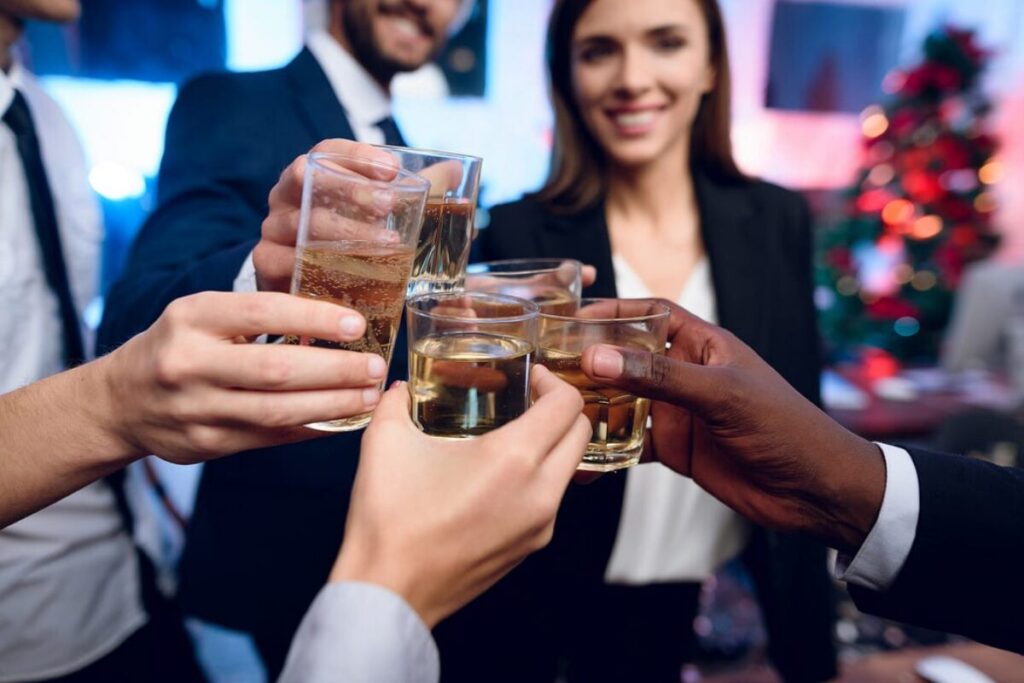
My friends cross racial lines and so parties I host are often racially mixed gatherings. The tone of these parties are not radically different from same-race social activities. The usual topics come up — family, money, weight gain, politics, work, and what’s good on Netflix, all of these topics peppered with jokes — but I know the energy is different in racially mixed social settings, a bit guarded with a different flavor of expression. I’ve witnessed some Black friends become introverts in the presence of White people and act as if they’re at work rather than a party. I’ve witnessed some White friends struggle with words in the presence of Blacks trying to use all of their brain energy to overcome the social loadings of racism and bias and not be considered even remotely offensive. At times, the party reflects a high school cafeteria in a racially mixed school where students, no longer in forced classroom integration, socialize within their own racial groups at lunchtime. BIPOC guests in one room and White guests in another and me, as host, mingling among each group.
By definition, our social lives and leisure activities are not governed by equal opportunity laws as with corporations and school systems. In our leisure time, no one is mandated to make one’s social circles racially diverse. Yet, the spirit of post-reconstruction Jim Crow laws still exist in our leisure activities. In some public places of leisure — beaches, clubs, resorts, parks — there are unwritten racial boundaries employed by participants, and, as a result, these places are segregated. It is not the structure but our choosing that keeps these institutions segregated. As adults, we would rather only play with those who share our same racial identity.
In the last analysis, do we self-segregate because of free choice and because people simply enjoy doing things with folks racially and culturally similar to them? Or do our parallel leisure activities represent exclusionary practices resulting from covert racism and unconscious bias that lead people to feel excluded and that they do not belong in certain public places such as beaches, clubs, resorts, and parks?
The Town Beach in Oak Bluffs on Martha’s Vineyard has been called the “Inkwell” since the late nineteenth century. The term, first used by Whites as a racial slur for the part of the beach frequently visited by Blacks, continues to be used by Blacks as a symbol of pride for the popular beach along the Atlantic seaboard.
The comedic video Funny or Die where a Black hiker, played by actor Blair Underwood, is stopped by a White couple while in one of America’s national parks, illustrates how many parks remain racially segregated. “Are you…are you lost? The White couple gently asks.
Separate but Equal Socializing
Perhaps our racially segregated leisure activities are simply a by-product of American’s hidden caste system described in Isabel Wilkerson’s Caste: The Origins of Our Discontents.
In the professional world, it is common and even acceptable for parallel organizations to exist. As a psychologist, I joined the American Psychological Association and the Association of Black Psychologists. Black physicians are members of American Medical Association, the largest association of physicians, and the National Medical Association, which promotes the collective interests of physicians and patients of African descent. There are race-specific organizations like these in almost every profession. Why is this so?
These organizations offer racial affinity group forums where racial identity can be fortified, where networks can be established, and where they can collectively forward an agenda of interest to their racial group. The fact that these parallel organizations continue to exist demonstrates that inclusive and representative practices are not fully present in the organizations where there is a large membership by the majority race. These organizations are still perceived to be White organizations.
Similarly, there appear to be leisure activities more associated with Whites and those associated with other racial groups. The data supports this phenomenon. Whites are more prevalent participants of hockey, downhill skiing, fly-fishing, travel, race car driving, visiting national parks, and in general, physical activities. Blacks are participants in sporting activities, like basketball and track, dancing and socializing in clubs, engaging in cooking activities like barbecuing and grilling, and attending church functions. Data shows Latinx people enjoy soccer, picnicking, cooking and large multigenerational family gatherings. The research on Asian North Americans’ leisure activities is limited with the two most studied groups being Chinese and Korean. Traditional Chinese leisure activities find involvement in a range of passive leisure activities including the tile-based strategy game mahjong, reading, walking, watching television, gardening, and sewing, to modern Chinese leisure activities that embrace physical activities. Korean North Americans generally identified with more passive activities as compared to other racial groups and prefer doing leisure in groups.
From my interviews with leisure researchers Monika Stodolska and Kimberly Shinew, I learned that there’s an overlap in the choices of leisure activity that we tend to do, but we tend to do them in parallel worlds. This made sense to me. I recall the group of Black women who remained after Sunday Mass at our Black Catholic parish to play the Chinese tile-based strategy game mahjong.
Many racially exclusive social groups exist across the United States. Not surprisingly as sociologists tell us “similarity breeds connection,” and personal networks are homogenous with regard to many sociodemographic, behavioral, and interpersonal characteristics. Race-based, invitation-only social groups have existed in the Black community for decades. As a member of two invitation-only Black women’s organizations, I know the power of these groups — personally in satisfying the basic human need of belonging, and professionally, in establishing networks for enrichment and advancement. Black social organizations have long histories dating back to 1927. All of these groups were born at a time of rigid segregation, overt racism, and racially encapsulated societies. In present day, the rationale for race-based membership for these organizations has only strengthened over the last several years. Black social groups, as with other People of Color social groups, provide psychological protection and self-defense, a sense of belonging and a sense of group identity not afforded within the larger society.
Empirically, it is hard to determine if racial groups are not engaging together in certain social activities due to free will or because they do not feel welcomed to participate. There are those who would argue that racial groups continue to self-segregate for leisure activities largely due to free will. They purport that increased efforts have been made to eradicate racism in recreational settings. If that is so, then it begs the question, if leisure is governed by free choice, should it matter if people self-segregate in parks, concerts, book groups, sporting events, clubs and other social activities?
I think it does.
I have been a chief diversity officer and diversity, equity, and inclusion consultant for practically all of my professional life. Because of this experience, I was very much convinced that our racial divide would heal through coming together in our work lives. In most organizations, we experience diverse populations and in these organizations working collectively to achieve a mission and forward business objectives reminds us of our common identity as humans.
I no longer believe that our work settings offer the best forums for achieving racial equity.
Until we change what we do outside of our work lives, we won’t move the mountains of racism. Systemic racism is deeply embedded in many organizational policies and practices, and employee bases are reflective of our racially confused, unevenly informed, and racially incompetent society. When people structures are composed of bosses, supervisors, administrators and co-workers with interdependent financial livelihoods, it is challenging to form egalitarian friendships across racial lines. Racial differences in the workplace are often treated as threats to be feared, and become a source of competition in the race for achieving the American dream. Organizational climates that are not culturally and racially competent only breed mistrust between racial groups.
The Cost for Same-Race Socializing as a Way of Life
Same-race socializing will remain the predominant way for how we spend our leisure time, providing us with a sense of belonging and an ease of expression characteristic of how one interacts in social settings. Melanie, a thirty-one year-old Black woman, states it this way: “When I want to go quick and deep, I go with my Black friends.” Going quick and deep with those friends who share our same race implies that friendships across racial lines take time and are a lot of work to establish and nurture. So true.
Even before contentious populist politics, a pandemic, and civil racial unrest, there’s been little appetite to forge friendships across racial lines and socialize in racially diverse settings. Over time, these feelings have only intensified.
Yet, if we don’t socialize across racial lines in egalitarian relationships, how will we gain the level of social trust necessary to create high-performing, inclusive organizations, and an economically stable, civil society characterized by an informed citizenry? If we socialize only with those who share our same race, how do we remove fear and develop a belief in the honesty, integrity, and reliability of others who are racially different from us? If we socialize only with those who share our same race, how do we learn empathy that pulls us out of the kind of ethnocentric and racially myopic thinking that leads to dehumanizing others?
If our socializing patterns are central to understanding culture, identity, postmodernism, and globalization, then socializing across racial lines is critical for understanding of our collective identity and what it takes to move us from separate and unequal to together and equal.
Socializing across racial lines for enjoyment and renewal holds the power to build the kind of trust necessary to advance racial equity and become better humans in this world that we share.
Share


Be Part of the Movement Toward Getting to We.
Be part of a growing movement that uses the arts to build trust, empathy, and shared humanity.
Subscribe to our newsletter for new stories, events, and insights on bridging difference and strengthening connection.
Sign Up
Related Reading
Continue exploring reflections and stories that inspire trust, belonging, and understanding across our shared human experience.

Words Create Worlds: How Language Shapes Belonging
The language we use builds inclusion—or division. Learn how words shape belonging and influence how we relate to one another...
Read More
What Questions Can I Ask To Ensure My Organization is Dismantling Its Systemic Racism?
Addressing systemic racism starts with questions. Here are practical prompts for evaluating your organization’s policies, culture, and accountability.
Read More
A Message From Your Safe Black Friends
Having White friends can be exhausting, here’s ten things Whites can do to gain racial stamina and forward more enlightened...
Read More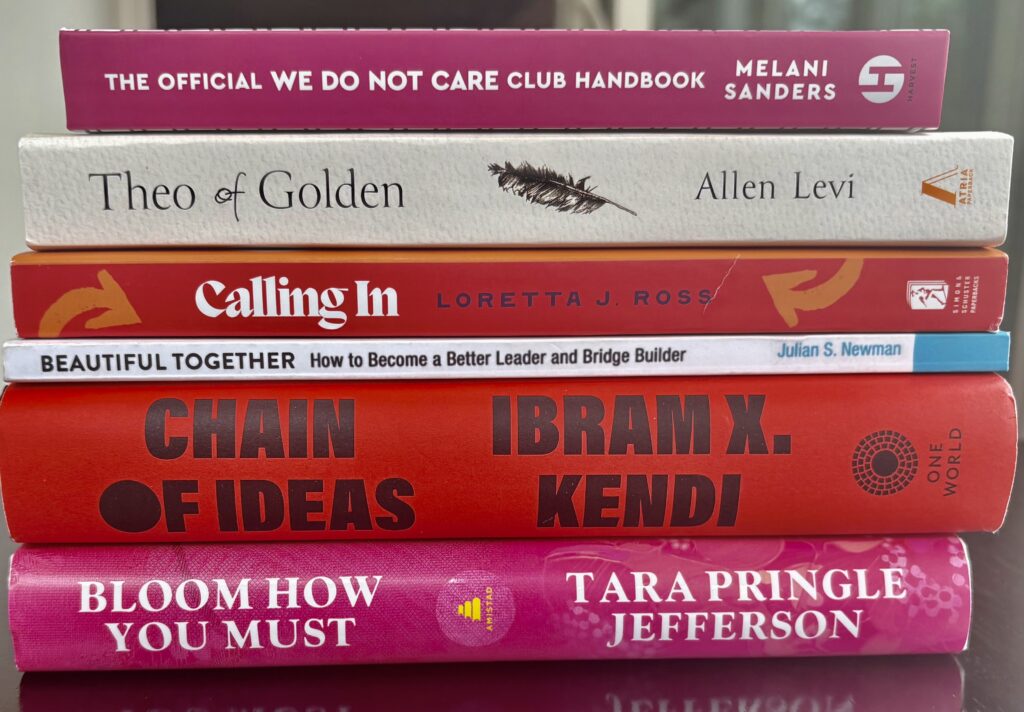
Getting To We Books for 2026
These books for 2026 provide ideas and inspiration to help transform division into connection in everyday life and across communities.
Read More
The God I Know: Finding Faith in Each Other
Faith and trust grow through relationships. This reflection shows how connecting with each other can reveal the divine in everyday...
Read More
Beyond Diversity Training: Building Trust in Real Time
Diversity training starts the conversation, but trust is built in the follow-through. Here’s how small actions after training create real...
Read More
Comments
Comments