
Getting To We Insights
Let’s Keep Talking About Racism: 10 Tips for How to Do That
Getting To We

Talking about racism in our current political climate has become more explosive and confrontational than ever before. That’s all the more reason why we have to meet the challenge, keep the conversation going, and work toward turning us and them into we. Yet, having conversations that are forward-moving and that position us as effective antiracists are not easy.
Here are some tips for fostering forward-moving conversations about racism:
Don’t back away from difficult conversations:
When baffled or completely gobsmacked about something someone has said, simply pause and with the most inviting tone you can muster, ask the person to “Say more about…” or “Tell me what informs your thinking…”
Remain curious:
Try these phrases… “I’m genuinely trying to understand where you are coming from…” or “I’m curious about this part of what you just said…”
Share your truth:
Own your reality with these sentence starters. “My experience has been…” “My stake in this is…” “From my window it looks like…” “My want for the outcome is…”
Challenge firmly and respectfully:
Focus on areas of disagreement in an inviting manner. Some examples to state your position… “What stands out for me is…” “Help me understand how…”
Confront falsehoods and lies:
Use the broken record technique and just keep repeating “That is not true.” “That is a lie.” “That has been proven to be false.” “This is not a matter of perspective. It’s a fact.”
Break down false equivalencies:
Related behaviors do not have equal weight when it comes to human rights. “Comparing apples to oranges” is not acceptable. They are both fruit, yet they are so different that the comparison is invalid. For example, the Black Lives Matter protests are based on the enduring truth of systemic racism. The Stop the Steal riots are based on the big lie that there wasn’t a free and fair election in the United States.
Manage tone and volume:
Use words that demonstrate intensity and passion instead of foul language and shouting that generally distracts from your intended message and puts the focus on you as the messenger. Try using “I’m committed to…” “I have no tolerance for…” “That is despicable…” “I strongly believe…” “I’m not at all confused about…”. “I find those statements offensive…”
Honor any points of agreement:
When the conversation is forward moving and headed toward mutual understanding, keep it going by statements such as “I appreciate that…” “We are both on the same page about…” “Let’s start from this value that we both share…”
Challenge your own assumptions:
Avoid righteousness by acknowledging your experiences without judgment on their worth as a person. Simple statements like “Correct me if I am wrong…” “This may be an and/also conversation…” help to bridge a divide.
Practice self-care:
Evaluate if the squeeze is worth the juice. Is this the right person, time, or situation for this conversation? When there is dysfunctional thinking, a lack of openness, or inflexibility, sometimes you just have to give that person a silent blessing and move on.
Discussion Highlights
Readers found the tips practical and actionable, highlighting the importance of listening, curiosity, and consistent effort in ongoing conversations about race. Many appreciated personal stories and reflected on challenges in workplaces and daily life.
“Wow, good thought starters for me. I often go right to anger, and judgement, which stops conversations and puts the focus on me. instead of trying to bring the discussion to light.” — Harriet Petti
“Thank you, I really hope to have thoughtful and firm conversations when it is needed – recently in line up in the post office and in my apartment building with a neighbour people said stuff to me in a way that I could tell they assumed I would agree…so I had to say something and I felt I made it half way to how I wanted to be able to be. This will help me stay in a conversation so it does not end so abruptly or in a way where we remain so far away. I find conversation a bit challenging at the best of times so I really appreciate your sharing. Your writing inspires me and this is also my chance to say thank you for all you share.” — Siobhan Avery, Port Coquitlam BC
Share


Be Part of the Movement Toward Getting to We.
Be part of a growing movement that uses the arts to build trust, empathy, and shared humanity.
Subscribe to our newsletter for new stories, events, and insights on bridging difference and strengthening connection.
Sign Up
Related Reading
Continue exploring reflections and stories that inspire trust, belonging, and understanding across our shared human experience.
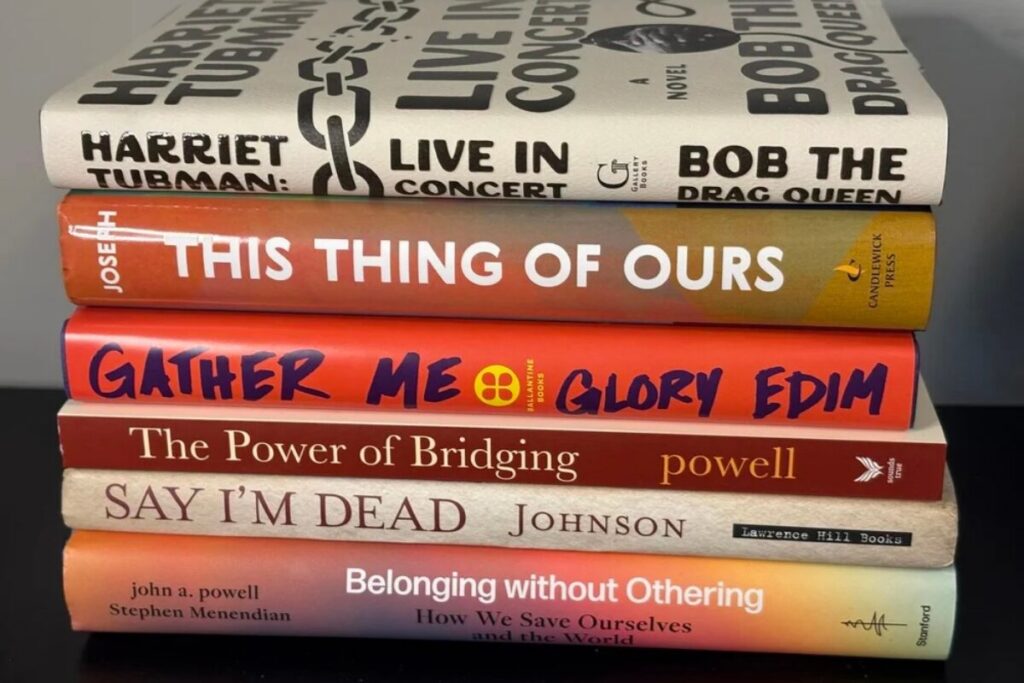
Getting To We Books for 2025
These books for 2025 provide ideas and inspiration to help transform division into connection in everyday life and across communities.
Read More
The Power of Memory Work: Learning from the Germans
Memory work helps societies confront past injustices. Learn how Germany’s approach can inspire reflection, accountability, and growth in our own...
Read More
6 Must Read Books for Understanding Racial Inequities
These six books offer insight into racial inequities in education, healthcare, housing, wealth, voting, and justice, helping readers think critically...
Read More
Comments
Comments