
Race, Identity & the Writer's Craft
This Makes Me Feel Uncomfortable
Deborah Plummer

And Other Distressing Emotions Associated with Learning about Race and Racial Identity
Behind every discomfort, there’s learning… if we stay with the discomfort long enough. There is no other way to learn the skill sets necessary to manage the dynamics of human differences without challenging our assumptions and moving out of our comfort zones.
Discomfort is a natural aspect of any learning process. Even geniuses, gurus, star athletes, great musicians, top artists, saints, prophets, and pretty much everyone learns this way. No discomfort, no learning.
In race education, the discomfort stems from the interruption of our culturally encapsulated living patterns and our culturally myopic thinking. Especially in the current politically charged zeitgeist, staying with discomfort long enough to eke out kernels of truth about race has become increasingly challenging.
Race Education: Encouraged, Prickly, or Taboo Subject?
Race education is a sought after learning experience for some, a prickly subject for others, and a taboo issue for many state lawmakers and education policymakers. Whether it’s examining the historical context for race in laws, policies, and practices, or exploring racial identity in human development, or learning competencies to successfully navigate our multiracial society, race education is causing psychological distress for many, especially White Americans.
In fact, the primary objection given by those who want to ban race education is that it stirs up painful emotions such as guilt and shame and causes an alleged experience of reverse racial discrimination, albeit without any evidence of disparate treatment or life-threatening consequences.
As a result of this emotional distress, they purport that race education should be eliminated from every K-Higher Ed classroom and from every professional development training session in public institutions. We should simply just eliminate race education and pretend that without it, we are no worse off than not knowing the identities and history of the various canonical incarnations of the characters of Star Trek.
Indeed, race education is complex, nuanced, and layered. Under the direction of incompetent educators, trainers and facilitators, race education can become explosive. Under the direction of dogmatic educators, trainers or facilitators, race education becomes divisive.
Yet, even the most seasoned, skilled, reputable race educator would not be able to eliminate the discomfort associated with learning the full and accurate record of American history, learning about racial identity development, and learning about the historical and ongoing manifestations of racial inequalities.
Banning the formal teaching of race education does nothing to reduce the discomfort. In fact, it only amplifies the discomfort associated with the many informal lessons that occur simply by growing up and living in a multiracial society.
There isn’t a cause-effect relationship between eliminating the idea of systemic racism and strengthening “the public and private bonds that create trust and allow for civic engagement.” A color-blind and race-neutral society isn’t achieved by abolishing CRT in schools, workplaces and the entertainment sector. Anti-racist cultures are realized by shared and accurate historical facts, enlightened, forward-moving conversations about race, and learning the competencies necessary to effectively manage the dynamics of human differences.
Preparing for Race Education
If you were having surgery, and the surgeon simply told you, “I’m the best in the field. You are in great hands in a world-class hospital,” those words would do little to actually prepare you for that surgery. In fact, you might find yourself feeling even more anxious despite those reassurances.
After surgery, being “in good hands in the best hospital” wouldn’t help to reduce the pain or support the healing process. A competent physician would prepare you by explaining exactly what will happen during the surgery and what to expect during the healing process. Understanding that process and knowing what to expect would reduce your anxiety and enhance trust.
Similarly, if race education consist of simply declaring, “As Americans we live in the best country ever. We are not a racist country!” the emotional process associated with learning about race and racial identity would not be in sync with our lived reality and do nothing to change that reality.
When learning is not aligned with we know and experience in our everyday lives, there’s little hope for creating the “best country ever” and one that is anti-racist. Race education helps us to understand how we got to the current state and what we need to do to get to the desired state. Feelings of discomfort, guilt, fear, and embarrassment associated with race education are to be expected and worth exploring.
This Makes Me Feel Uncomfortable
The purpose of race education is to heighten awareness of what we don’t know, help us to unravel the complexities of a racialized society, and provide us with the skills to successfully navigate our increasingly multiracial society. The unease and awkwardness associated with this learning is a simple form of anxiety that is natural, predictable, and controllable.
Not unlike the surgeon who can support you to manage anxiety associated with having surgery, competent race educators can manage the anxiety associated with race education with clear learning guidelines and a focused agenda with specific behavioral objectives that can be achieved within the allotted timeframe. Without these conditions, learners feel like they are participating in a bad TV reality show.
This Makes Me Feel Guilty
Healthy guilt is a function of our conscience that lets us know that we have done something wrong. If you have participated in racially discriminatory housing practices, or participated in White flight when Blacks and Brown move into the neighborhood; hired Whites based on aptitude or potential while only hiring BIPOC on proven demonstrated achievement and competencies; designed or taught racist curricula and employed racially-motivated disciplinary practices in education; denied access to and mistreated BIPOC patients in healthcare; engaged in making racial or anti-Semitic slurs or derogatory remarks based on race; hold membership in a White Supremacy group, White nationalist group, or Whites-only clubs; designed and supported practices that suppress the voting rights of BIPOC; voted for elected officials with racist beliefs and behaviors; denied loans or credit to qualified BIPOC or created policies that make it difficult for BIPOC to climb the economic ladder or that limit BIPOC intergenerational wealth; determined that BIPOC are guilty of a crime and deserved to be punished solely because of their racial identity while assuming innocence or less culpability for Whites; or physically or psychologically harmed someone because of their race; or have attitudes that promote the superiority of one race over another, then guilt is an appropriate feeling and your conscience is working.
Unhealthy guilt is a function of self-esteem and lets you know that in that particular situation, you don’t have a way to feel good about yourself. If you experience unhealthy guilt as a result of race education, it’s a signal that you should do something to gain control of those feelings and engage in activities that will support you to feel better.
Learn more about your racial identity and its impact on your behavior and thinking. Read books, articles, watch films, join discussions that support learning about race and racial identity. Demonstrate cultural humility and apologize for unintended microagressions. Encourage and engage in honest and difficult conversations about race with those who do not share your racial identity. Engage in multiracial living by where you choose to live, who you buy services from, who you vote for, what you vote for, what organizations you support and promote, who you have in your circle of influence, who you receive information from, and who and what you choose to believe.
This Makes Me Feel Unsafe
Feeling unsafe stems from real or perceived fear that is externally or internally driven and deeply rooted in one’s personal experiences. Conservative political agendas have shrouded race education with negative emotional tags that attach to our thoughts and experiences stored in our memories. Treating racial differences as threats to be feared sets the stage for individuals to feel unsafe while learning about race and racial identity.
Take away the wrappings of threat and race education becomes no more fearful than learning math. Math can be challenging and hard and lead to feelings of incompetence, especially if you have little aptitude for it. However, this does not mean that we should ban math education. Security emerges even from learning basic math and greatly increases with tools like calculators and math apps. Race education needs to be approached with similar sensibilities to math education. It can be challenging and hard for a lot of people, but we have the competencies and tools to master at least the basics.
In race education, moderate risk taking and emotional resilience are the necessary tools for learning hard truths. Gentle bumping is required.
There are many individuals, including some Whites, who believe that race education should not be gentle. They believe that people need a decent emotional punch to reach profound insights about social privilege, dismantling systemic racism, and erasing the social loadings that perpetuate racism. In theory, this may be true for how some individuals need to learn race education (not unlike those who need a fire and brimstone Jesus to get their lives together). Pedagogically, this approach only sets off the automatic physiological reaction of fight or flight, with a lot of fighting by those with dogged adherence to White nationalism and a lot of fleeing for those with low racial stamina.
Gentle bumping occurs in learning environments where people know that others care about their well-being and respect their right to express their opinions even if they demonstrate ignorance, miseducation, or are contrary to popular thinking but are beliefs that do not fall in the category of falsehoods, conspiracy theories, or propaganda.
Gentle bumping is effective when there are shared facts, shared reality, and an openness to learning from all parties. Gentle bumping recognizes that when there isn’t capacity to be influenced or for any party to take in new or different information, it becomes necessary to move on with grace and in a civil manner. Doing so, supports self-care for all parties and can offer the opportunity to reflect and learn independently.
This Makes Me Feel Ashamed
Feelings of shame stem from a negative evaluation of oneself. Being ashamed of behaviors that are unethical or harmful to others is an appropriate emotion. Formal or informal race education that stirs up shame for someone who has engaged in past or current behaviors that were discriminatory can happen.
Consider Derek Black, former White supremacist, the son of Don Black, founder of the Stormfront racist online hate community, and godson of former KKK Grand Wizard David Duke, whose interactions with a diverse group of friends radically changed the racist position firmly embedded in his upbringing. Derek told me in an interview, “I think I wrote in my original letter in 2013 denouncing White nationalism that I couldn’t get my head around chatting with an African American friend about their summer plans, but simultaneously advocating for an ideology that thought it would be better if they weren’t in the country.” Feeling ashamed about his behavior and thinking patterns led to new ways of knowing, healthier relationships, and a better quality of life for Derek.
Feeling ashamed about your behavior or thinking differs from feeling ashamed about your personhood. Identity-based shame results from feeling bad about who you are as a human being or about some immutable aspect of your humanity.
Identity-based shaming has no place in race education. Period.
From Discomfort to Learning
Racism is a toxic phenomenon that exists like a cancerous tumor in our environment. It affects the quality of all of our lives. It threatens our existence and erodes our capacity to develop and grow. Race education is the antidote.
If you experience discomfort when learning about race and racial identity, examine the source and distinguish it from other kinds of emotional distress that may or may not be tied to what you are learning. Challenge yourself to to stay with the emotion and discover its root cause. Gain the emotional resilience and racial stamina necessary to continue to grow and learn.
Yes, if you are White, there’s discomfort realizing that you share the same racial ancestry that historically created structures and systems of racial disparities that persist to current day. Despite your good intentions, you might even be complicit in perpetuating racial disparities. And yes, if you are BIPOC, there’s great discomfort as we struggle with the residual impact of America’s racist history, experience racial disparities, and battle this toxicity in our everyday lives; and, yes, some of us, may even be complicit in perpetuating racist practices and behaviors.
Yet, for all of us, learning through the discomfort is the only pathway toward that more perfect union. No discomfort, no progress.
#GettingToWe
Share


Be Part of the Movement Toward Getting to We.
Be part of a growing movement that uses the arts to build trust, empathy, and shared humanity.
Subscribe to our newsletter for new stories, events, and insights on bridging difference and strengthening connection.
Sign Up
Related Reading
Continue exploring reflections and stories that inspire trust, belonging, and understanding across our shared human experience.
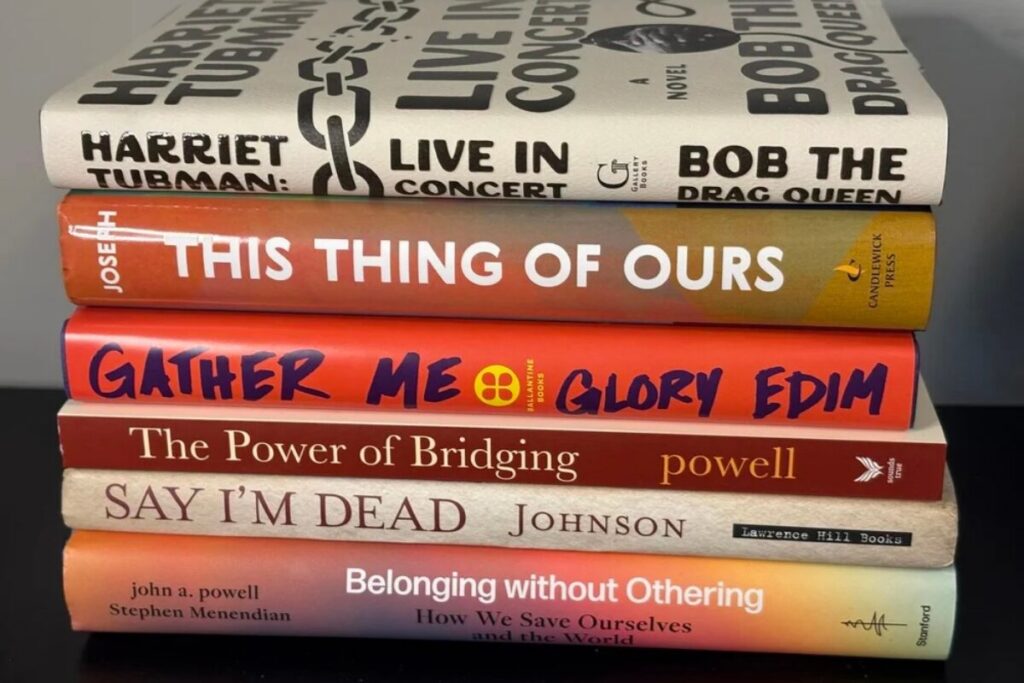
Getting To We Books for 2025
These books for 2025 provide ideas and inspiration to help transform division into connection in everyday life and across communities.
Read More
The Power of Memory Work: Learning from the Germans
Memory work helps societies confront past injustices. Learn how Germany’s approach can inspire reflection, accountability, and growth in our own...
Read More
Let’s Keep Talking About Racism: 10 Tips for How to Do That
Talking about racism is challenging, yet essential. These ten tips provide guidance for continuing conversations in productive, meaningful ways.
Read More
Comments
Comments