Donate now and together we’ll turn us and them into we. We also accept stock donations!

The Power of Memory Work: Learning from the Germans

A negative Covid test under any circumstances is cause for celebration but I was especially thrilled to see only a marked C strip on the test card after a week of Covid symptoms. It meant that I was clear to take a long-planned trip to Berlin as part of the Visiting Program of Widen the Circle. Widen the Circle’s mission is to combat hate through a shared understanding of the past. The Visiting Program is one of their signature initiatives designed to build bridges between educators and activists in the U.S. and Germany. Thought leaders on both sides of the Atlantic are invited to the program to use the power of the local history to learn how to combat racism and prejudice as well as deal with the historic legacies of injustice.

I was honored to be a part of this learning and personal growth experience, but I gotta tell you, the program was intense—not only in its schedule but in the learning. We visited numerous memorials and historical sites. The week-long program included a visit to Anne Frank museum, a walking tour of central Berlin Jewish quarter, a tour of West Berlin Jewish history, a visit to the House of the Wannsee Conference (the site of the meeting where senior Nazi bureaucrats organized “the Final Solution to the problem of the Jews”), an inspiring and moving visit to community school and a deportation site memorial with Sabeth Schmidthals, walking tour of Leipzig and Erich Zinger House, a hike (literally) of historical sites related to the Nazi period deportation of Jews, a visit to Döbeln meeting young activists, seeing the award-winning Yellow Brick Memory Project that inspired the work of Bryan Stevenson and others in the U.S., meeting with Citizens for the Badehaus (one of the largest displaced persons camps for Jewish survivors in post-war Europe), and visiting a center for refugees. WHEW!

Our program text was Susan Neiman’s Learning from the Germans, which I would highly recommend and a number of other books, podcasts, and articles.

Although I am still unpacking the experience, here’s a bit of what I learned from the program:

The Power of Memory Work Lies in Connecting the Past to Present:

As a psychologist, I conceptualize memory work as a process for how we acquire, store, retain and retrieve information. As a methodology used by German researchers and activists, memory work is a process of engaging with the past in an accurate and ethical way. For memory work to have sustainable impact, accurate recording of history not only has be available in books, memorials, and artifacts, but we have to experience the learning in such a way that we connect the past to the present. Connecting the past to the present isn’t a cerebral exercise. We have to have meaningful dialogue with others about how we’ve received, interpreted, and connected that information to our own lived experience. The power of memory work lies in identifying the similar threads from the past in order to create a better future for all of us. We need to ask, How does this historical pattern show up today? Susan Neiman’s book does a masterful job of showing how Germany’s efforts to atone for the crimes of the Holocaust are being, and can be used, in the U.S. as we deal with our horrid history of enslavement of people of African descent and the colonization of Indigenous People.

Felt History or Emotional History Remind Us That People Make History:

In many ways, keeping the memory of the people who lived these truths alive is just as important (or even more important, in my humble opinion) as what gets recorded in history books. The bios behind each of the Stumbling Stones found in Germany and all over Europe are gentle and powerful reminders that people make history. Keeping the memory of those who walked the paths in those traumatic and horrific times is critical to our understanding of how communities are shaped today. In many ways, the U.S., particularly the Deep South, is still working through the strong and intense emotional reaction to the brutally murdered, 14-year-old Emmett Till by White Supremacists, and whose body was left disfigured in his open casket at the insistence of his mother, Mamie Till Mobley. “I couldn’t bear the thought of people being horrified by the sight of my son. But on the other hand, I felt the alternative was even worse. After all, we had averted our eyes for far too long, turning away from the ugly reality facing us as a nation. Let the world see what I’ve seen.”Just as the Stumbling Stones are a reminder of the individuals who were brutally murdered, we need to keep fixing our gaze on the ugly reality of racism and bigotry and see the face of Emmett Till in every injustice.

You Cannot Remember Alone:

I learned this truth from Gabriele Hannah who uses the power of narrative to fight bigotry and hate by keeping the memory alive of German Jews in the Rhine-Hesse district region whose communities were destroyed by the Nazis. She told us “you have to come together to understand the other side—that is the only way we can reconcile. I am not responsible for what has happened in the past, but I am responsible for what is going to happen in the future. Bigotry didn’t end in 1945 . These people had families before that and have a family now.” “ It’s not about forgiveness,” she continues, “pity is feeling sorry that they were subjects of this horrid history. Empathy is required. You can’t understand the death of 6 million unless you know one of them.” Keeping collective memory alive in our minds and hearts changes how we act today. Those who remember and know, don’t act like those who don’t know.

Arts and Culture are Important Memory Markers:

As an effort to align German arts and culture with Nazi ideas, thousands of books considered to be “un-German” were burned by the Nationalist German Student Association at Bebelplatz in 1933. We visited The Empty Library memorial on the grounds of Humboldt University. The square memorial symbolizes knowledge that was destroyed.  Heinrich Heine, one of Germany’s greatest poets, who was of Jewish origin, wrote “Where they burn books, they will also ultimately burn people.” I was reminded that scholar and civil rights activist W.E.B Du Bois studied at Humboldt University for two years and there is a memorial marker there in his honor. As Germany continues to recognize and honor his legacy, book banning efforts by right wing extremists targeted at racial and sexual identities are spreading across the U.S. May the Empty Library be a not-so-gentle reminder for why we need to pay attention to the book banning efforts in the U.S, and take them seriously.

Memory Gets Translated into Law, Politics, and Culture:

History lives in our laws, political ideologies, and especially in our culture. It’s debatable if history is written by the victors or by those trained in documentation. Either way, history lives most vividly in culture. Historical facts can be downplayed or reinterpreted or even denied, as the horrific acts of the Holocaust have been. We can diminish reality or omit facts or promote inaccurate interpretations as the United States has done with much of its written account of slavery, but the memory of this history still lives on in the culture. In Germany, public denial of the Holocaust is criminalized. This includes sharing images such as swastikas, wearing an SS uniform, and making statements in support of Hitler. These laws are rooted in the memory work of Germany’s history and identity and are in response to resurgence of far right extremist ideology.In contrast, there are states in America working to ban discussions of Critical Race Theory The discussion bans also extend beyond race to LGBTQ+ issues. Banning these discussions do not change our racist history and contemporary manifestations of systemic racism, heterosexism, homophobia, and transphobia. Without doing psychological and cognitive memory work, these isms and phobia only grow.For example, many confederate statues and flags, symbols of White Supremacy and White Nationalism, have been removed following the Unite the Right Rally in Charlottesville and the murder of George Floyd. Yet, over 700 statues remain and confederate flags are widely flown all of the South and in the North. There are those who claim these statues and flags simply commemorate Southern history and culture. Yet, there is little doubt that these memorials serve to sanction and keep alive racist attitudes in U.S. culture. Just as the Holocaust memorials serve to impact the state of liberal democracy present in Germany today, building the capacity as a nation for important discussions about Critical Race Theory and LGBTQ+ rights. as well of the presence of Confederate statues and flags are foundational to understanding our American identity, These discussion should not be denied, dismissed, or side-lined in public spaces, especially in educational settings.

My Learning from the Germans

We can learn from the Germans that first you have to acknowledge, then you can heal, then you can connect across our shared humanity. Widen the Circle’s Visiting Program taught me that memory work is not a step-wise, one-and-done process. We build social trust with every cycle of acknowledging, healing, and connecting. Memory defines who we are in our individual and collective identities. Learning these truths with the thought leaders and activists in Germany provided me not only with a better shared understanding of history, but brought me closer to our shared identity as humans. That’s the power of memory work.

Let’s Keep Talking About Racism: 10 Tips for How to Do That

Talking about racism in our current political climate has become more explosive and confrontational than ever before. That’s all the more reason why we have to meet the challenge, keep the conversation going, and work toward turning us and them into we. Yet, having conversations that are forward-moving and that position us as effective antiracists are not easy.

Here are some tips for fostering forward-moving conversations about racism:

Don’t back away from difficult conversations:

When baffled or completely gobsmacked about something someone has said, simply pause and with the most inviting tone you can muster, ask the person to “Say more about…” or “Tell me what informs your thinking…”

Remain curious:

Try these phrases… “I’m genuinely trying to understand where you are coming from…” or “I’m curious about this part of what you just said…”

Share your truth:

Own your reality with these sentence starters. “My experience has been…” “My stake in this is…” “From my window it looks like…” “My want for the outcome is…”

Challenge firmly and respectfully:

Focus on areas of disagreement in an inviting manner. Some examples to state your position… “What stands out for me is…” “Help me understand how…”

Confront falsehoods and lies:

Use the broken record technique and just keep repeating “That is not true.” “That is a lie.” “That has been proven to be false.” “This is not a matter of perspective. It’s a fact.”

Break down false equivalencies:

Related behaviors do not have equal weight when it comes to human rights. “Comparing apples to oranges” is not acceptable. They are both fruit, yet they are so different that the comparison is invalid. For example, the Black Lives Matter protests are based on the enduring truth of systemic racism. The Stop the Steal riots are based on the big lie that there wasn’t a free and fair election in the United States.

Manage tone and volume:

Use words that demonstrate intensity and passion instead of foul language and shouting that generally distracts from your intended message and puts the focus on you as the messenger. Try using “I’m committed to…” “I have no tolerance for…” “That is despicable…” “I strongly believe…” “I’m not at all confused about…”. “I find those statements offensive…”

Honor any points of agreement:

When the conversation is forward moving and headed toward mutual understanding, keep it going by statements such as “I appreciate that…” “We are both on the same page about…” “Let’s start from this value that we both share…”

Challenge your own assumptions:

Avoid righteousness by acknowledging your experiences without judgment on their worth as a person. Simple statements like “Correct me if I am wrong…” “This may be an and/also conversation…” help to bridge a divide.

Practice self-care:

Evaluate if the squeeze is worth the juice. Is this the right person, time, or situation for this conversation? When there is dysfunctional thinking, a lack of openness, or inflexibility, sometimes you just have to give that person a silent blessing and move on.

Discussion Highlights

Readers found the tips practical and actionable, highlighting the importance of listening, curiosity, and consistent effort in ongoing conversations about race. Many appreciated personal stories and reflected on challenges in workplaces and daily life.

“Wow, good thought starters for me. I often go right to anger, and judgement, which stops conversations and puts the focus on me. instead of trying to bring the discussion to light.” — Harriet Petti

“Thank you, I really hope to have thoughtful and firm conversations when it is needed – recently in line up in the post office and in my apartment building with a neighbour people said stuff to me in a way that I could tell they assumed I would agree…so I had to say something and I felt I made it half way to how I wanted to be able to be. This will help me stay in a conversation so it does not end so abruptly or in a way where we remain so far away. I find conversation a bit challenging at the best of times so I really appreciate your sharing. Your writing inspires me and this is also my chance to say thank you for all you share.” — Siobhan Avery, Port Coquitlam BC

6 Must Read Books for Understanding Racial Inequities

Books have always been a critical aspect of my educational journey. During the summer months of my youth, absent the financial resources for day camps, my mother decided that our educational enrichment would consist of visiting our county library located at the end of our street where she made joining the summer book club mandatory. There, with the guidance of wonderful librarians, I was introduced through books to a world very different from my beloved inner-city neighborhood. I was a willing recipient eager to read just about anything they recommended. Today, my love of books remains strong and I am always happy to receive great recommendations.

Especially in the DEIB space (diversity, equity, inclusion and belonging), books have a way of helping us come further to the truth… our own and others. Books help to sharpen our thinking, challenge our assumptions, and expand our world views. Books can enlighten and inspire us to engage more with each other on issues that matter. Books are an important component of #Getting to We.

Understanding racial inequities is a complex topic that often makes us feel uncomfortable because they continues to exist and persist. I have chosen these six books because they ease the discomfort by turning discomfort into insight. With insight we can then adjust or change our thinking and behavior in order to make a difference in our world. I have chosen a favorite book in six areas central to understanding racial inequities: the achievement gap in education, healthcare disparities, housing discrimination, the wealth gap, voter suppression and criminal justice reform. I invite you to share other titles in each of these categories that you have found helpful. Enjoy reading, learning, and discussing!

Achievement Gap in Education

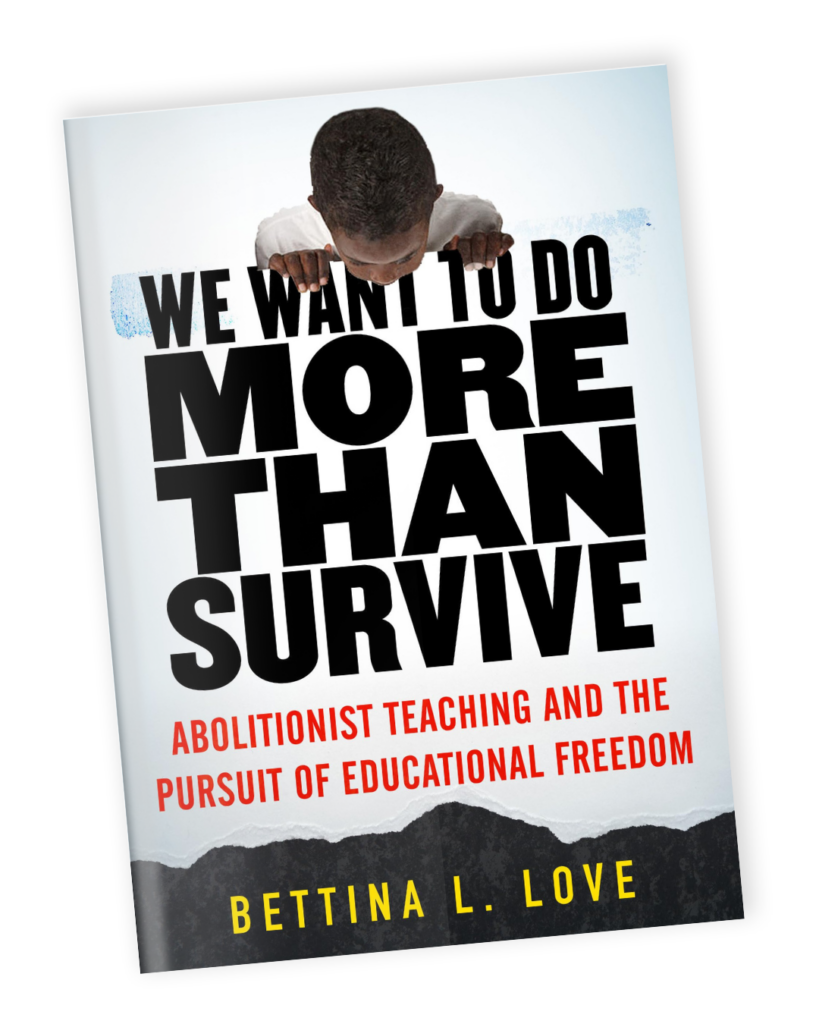
I had never heard of the theoretical orientation of abolitionist teaching before reading Bettina Love’s book. She describes it as “the practice of working in solidarity with communities of color while drawing on the the imagination, creativity, refusal, (re)membering, visionary thinking, healing, rebellious spirit, boldness, determination, and subversiveness of abolitionists to eradicate injustice in and outside of schools.” This is a real #BlackLivesMatter #DisruptTexts #EduColor #MyAsianAmericanStory kind of book that introduces educational reform through activism rooted in “mattering, surviving, resisting, thriving, healing, imagining, freedom, love and joy.” Wow!

Healthcare Disparities

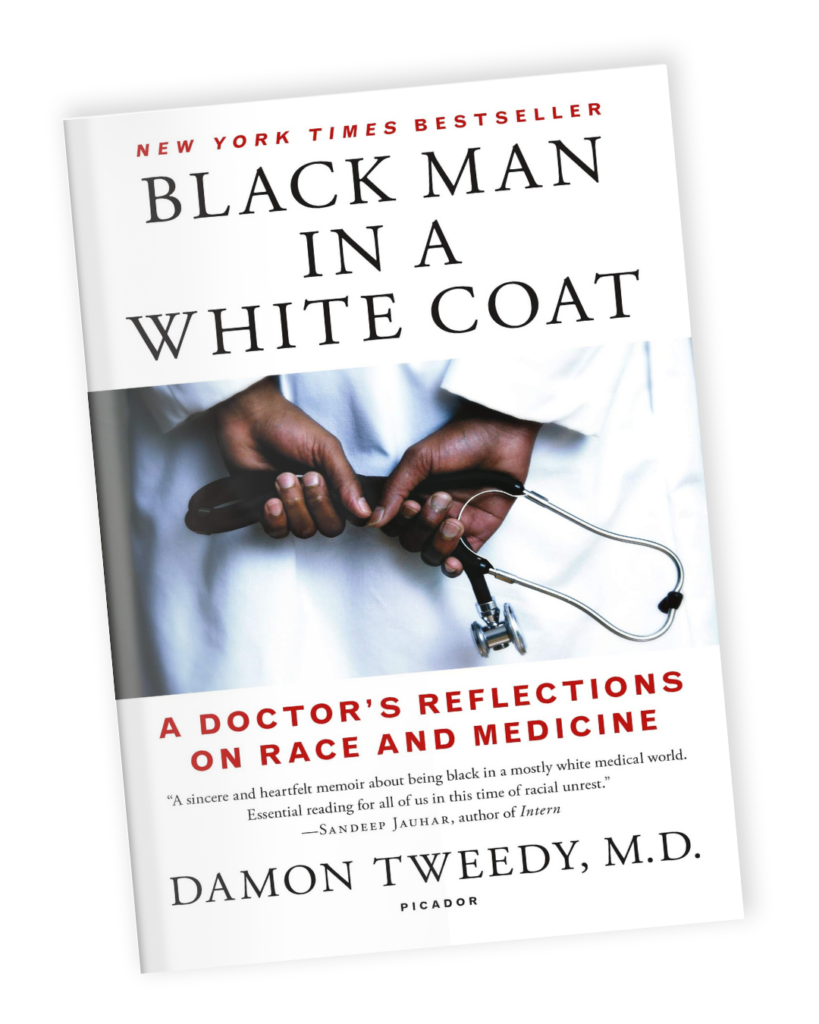
Most books on healthcare disparities are written for academics or medical practitioners, and that is a shame. We all participate in the healthcare system and understanding how it works supports us to be better informed consumers and advocates for health equity. I choose Black Man in a White Coat because it not only tells the amazing story of Dr. Damon Tweedy’s journey through medical school and as a practicing physician, but it also examines the intersection of race and medicine in a way that will make you go hmmm…

Housing Discrimination

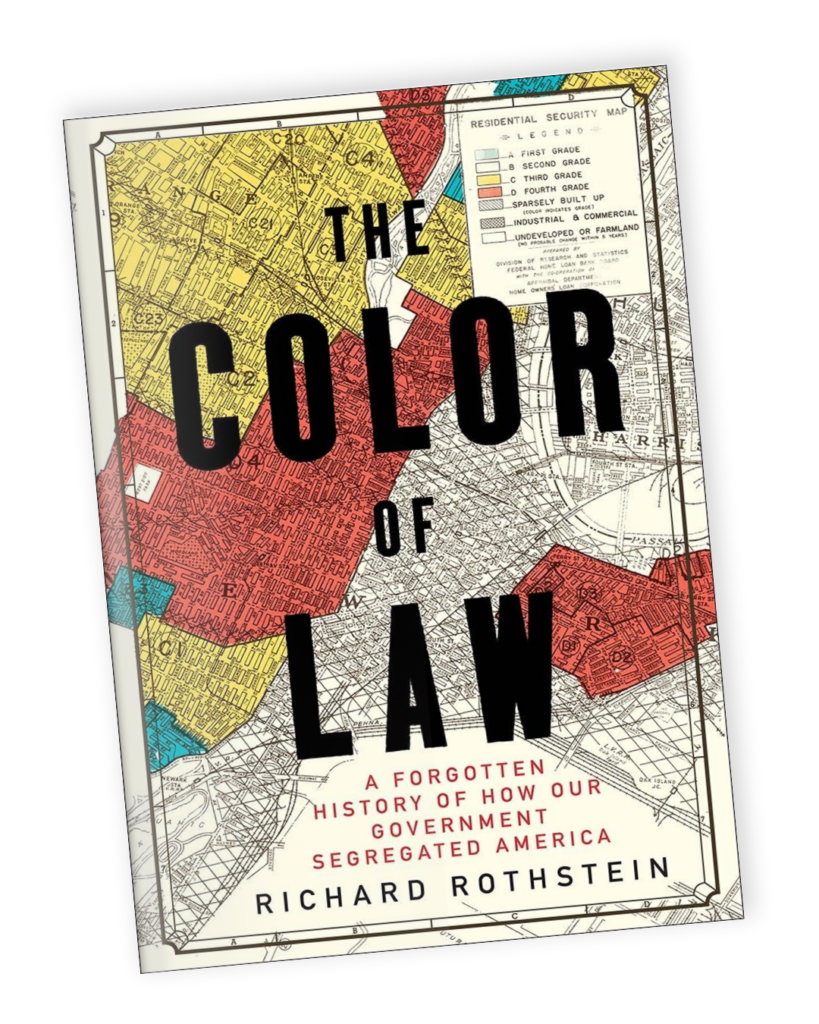
There are so many post-it notes and yellow highlighting in my copy of The Color of Law that I’m sure they’ve added an extra half pound to its weight. Richard Rothstein, a leading authority on housing policy, covers decades of policies enacted by local, state and federal government agencies and court decisions blatantly sanctioning segregation. I was horrified to read about these facts, terribly saddened that these truths are not common knowledge, and inspired to do more to change this reality.

Wealth Gap

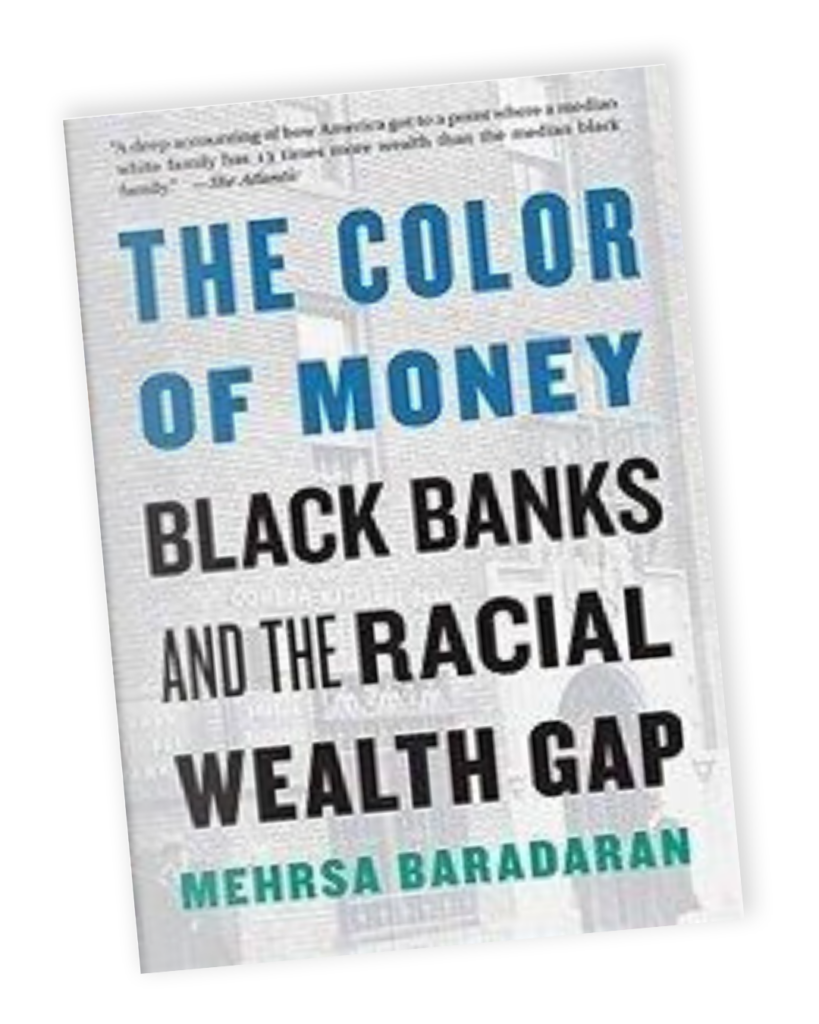
I’ve always heard that a major reason why the wealth gap exists between blacks and whites is that blacks do not keep their dollars by buying within their own communities. Mehrsa Baradaran’s The Color of Money: Black Banks and the Racial Wealth Gap dispels this myth that black communities could ever create wealth in a segregated economy. Baradaran connects the dots and shows how structural racism and the policies that have been laid out have resulted in racial wealth gap. This book is also a great one to listen to as an audio book if you want to easily understand the general themes.

Voter Suppression

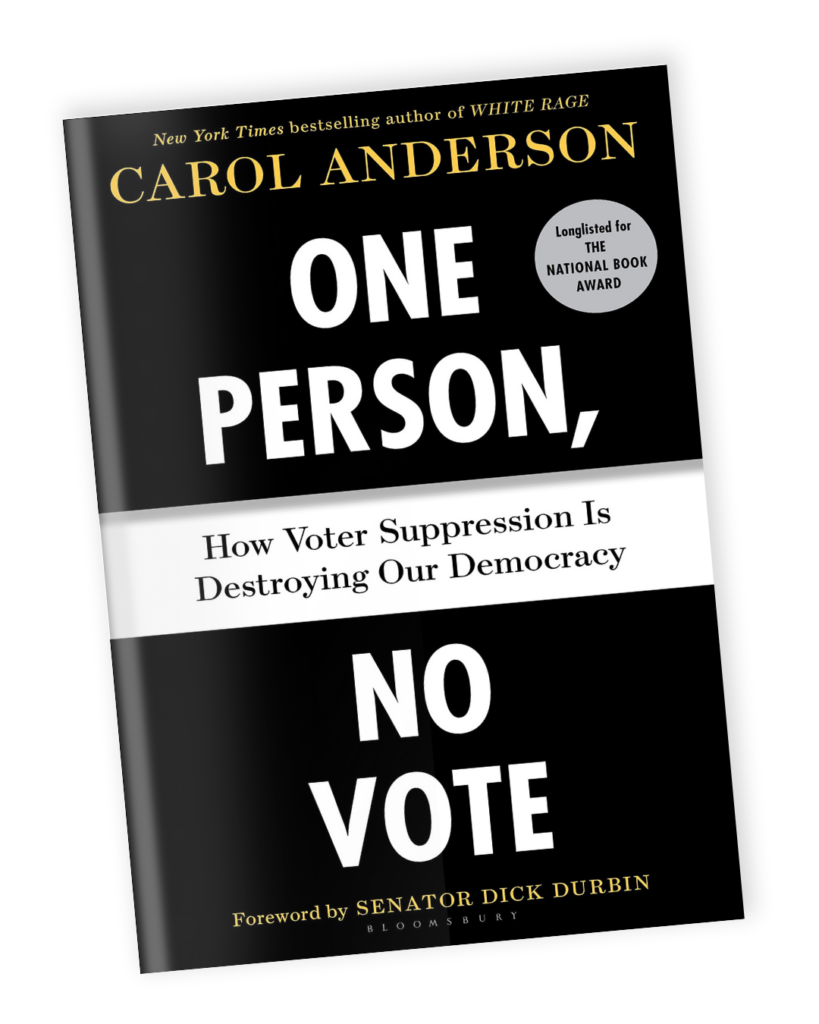
Stacey Abram’s work on voter suppression and Fair Fight greatly heightened my awareness about elections and voter rights. I have always suspected that the scenes of election rigging in Netflix’s House of Cards were close to the truth and will continue to learn more, so that I can do more to prevent it. Carol Anderson’s One Person, No Vote explains how voter suppression works (gerrymandering, poll closures, photo ID requirements) and explores how resistance can effectively work. Learning about the history of voter suppression is essential to voting rights activism today.

Criminal Justice Reform

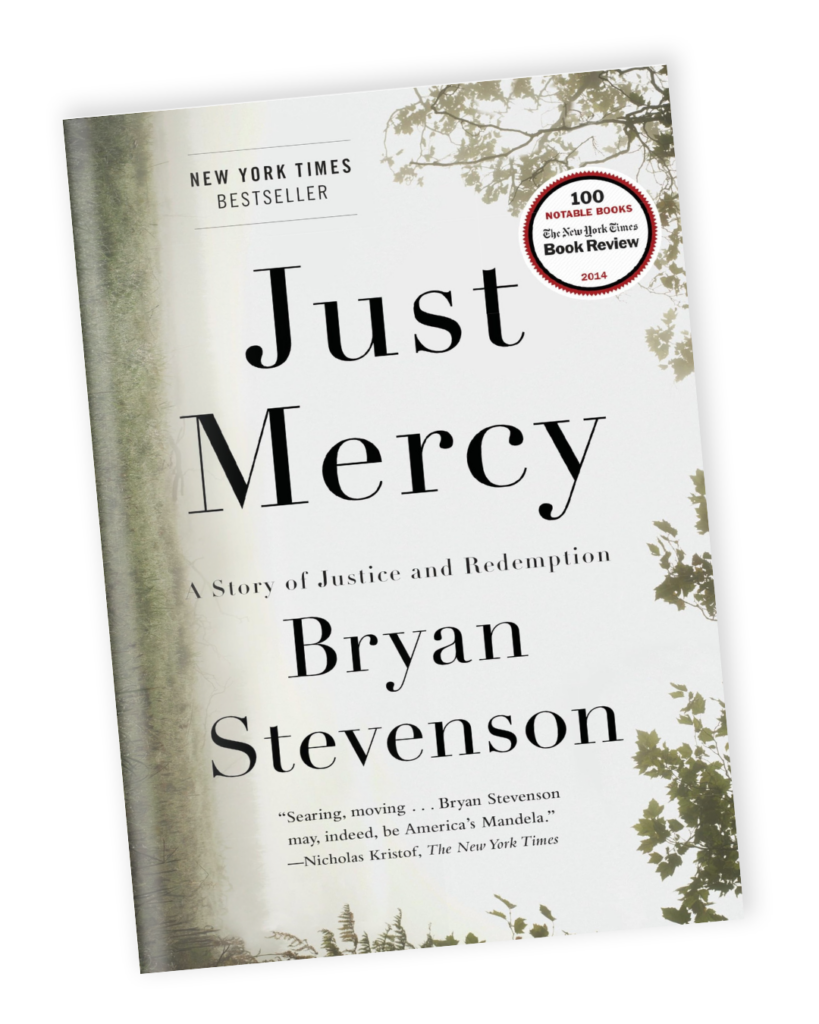
Bryan Stevenson’s Just Mercy is a stand-out among books those that show just how broken our criminal justice system is, especially for black and brown Americans. What makes this book a Getting To We pick is captured in the title. We all can exercise the gift of mercy toward someone who has done wrong and we all could use mercy when we have done wrong. Bryan Stevenson provides us with a pathway toward equal justice and just being better people. The book is a classic and so worth reading for the depth and nuances of the story that cannot be adequately captured even in such a great movie.

For a Deeper Dive

Discussion Highlights

“Love this list! It is ROCK SOLID! Thank you for being you Dr. Plummer! I’m spreading more word. Lotsa love from your old neighborhood…Forest Hill in East Cleveland Heights.” — Adele DiMarco

“What great recommendations! As an avid reader myself I’m always on the lookout for great books, especially when it comes to racial justice. My freshman year of college , my recommended reading was “Between the World and Me” by Ta-Nehisi Coates and it really opened my eyes to the racial disparities experienced by Black people. Thanks again for the recommendations. I’ll definitely put them on my list.” — Sara Espinosa

“These are such great book recommendations. This is a great place to start for anyone who is seeking to understand how racism is ingrained and operates throughout several sectors of both the public and private sectors of society.” — Raven Bailey

“Loving these book recommendations. As an urbanist, many of my closest friends work and study in the urban planning and community development fields. I’d love to see the book “The Color of Law” integrated into urban studies and urban planning programs – it seems like an essentially read for the urban studies related fields.” — Anonymous

“Thanks for your book recommendations! I just finished reading “Just Mercy” and look forward to watching it on Netflix this weekend. Another must-read I want to recommend is “Mindful of Race” by Ruth King. King takes a meditative and Buddhist approach to racial healing and awareness, much like Resmaa Menakem’s “My Grandmother’s Hands.”” — Dania Rivas

“George Floyd’s tragedy has caused us to feel a range of different emotions in the last few weeks. I’ve heard many of us ask, “what (more) can I do?” Reading books is a good place to start, especially for those of us who are book worms AND still under quarantine. I found these 6 brilliant books very relevant. Sometimes, we need to look back in order to move forward. Let us get to know the history, formation, and development of racial inequalities in the US. We can always learn more.” — Pricilla Cheung

“Excellent list of books. “Just Mercy” is now on Netflix.” — Marla Hunter

“Also Stamped from the Beginning – The History of Racist Ideas by Ibram X. Kendi” — Lara

Racism’s Groundhog Day

Although the origins are unclear, the tradition of the groundhog predicting the weather dates back to 1887. If the groundhog, Punxsutawney Phil, named after the city in Pennsylvania where Groundhog Day is annually celebrated on February 2nd, sees his shadow, we’ve got six more weeks of winter. If not, we’re good for an early spring. The 1993 movie of the same name features Bill Murray as a disgruntled weatherman assigned to film the celebration in the small town. Because of his negative attitude, he becomes trapped in a time loop forcing him into an endless experience of Groundhog Day.

It’s June 2, 2020 and a rerun of the comedy television show Black-ish is airing. This episode was first aired on February 22, 2016 and the plot line reflects the then current reality of police brutality. In the episode, the Johnson family, like many real-life families, gathers around their television to watch a news report of yet another unarmed black man by police officers. The community has gathered in protest of police violence and in solidarity with the Black Lives Matter Movement.

Discussing to the news coverage, the grandfather quotes from Malcolm X and the grandmother encourages the teenage son, who wants to actively participate in the movement. Her encouragement comes with lessons learned from her own activism in the 1960’s and she tells him to be disruptive but respectful, especially toward police officers. His father and grandfather opine and go deeper into the complexity of how the teenage son should respond to the police. They warn him that respecting the police and doing what is asked still may not save his life. His mother’s anxiety heightens at the very thought of her son’s participation, and her nervousness is visible as she attempts to explain the situation in a hopeful tone to his younger siblings. Then they were referencing the police violence against Eric Garner, Tamir Rice, Michael Brown, Freddie Gray and Sandra Bland in the episode. If the episode were taped today, the script would be the same. They would only need to add to list Ahmaud Arbery, Breonna Taylor and George Floyd.

In the fantasy comedy film, Groundhog Day, Bill Murray’s character escapes the time loop by finally changing his ways and reporting the day’s festivities with an upbeat attitude instead of being cynical, helping people throughout the day, and falling in love with a woman who befriends him. As a result of his changed behavior, he awakens the next day to February 3rd.

In the Black-ish episode, after discussing the pros and cons, the Johnsons decide to participate in the protests as a family, fortified by the belief that their children and the next generation have learned the lessons and represent hope for the future.

In both of the movie and television show, the future is brighter due to positive attitude, changed behavior and steadfast hope. The groundhog has seen its shadow on racism in America and we continue in the dark of winter. We have been here before. We are here again. Will we get to a better future together?

More on combating racism

Discussion Highlights

Readers connected the metaphor of repeating history with real-world racial inequities. They emphasized the need for changed behavior, collective action, and maintaining hope despite systemic challenges.

“The connections between the movie and the series are spot-on. It is unfortunate that there still hasn’t been any significant change in the system and the events like police brutality and violence against protestors seems to happen again and again. I loved your take on how we can hopefully disrupt the cycle…by working together. I think that is specially relevant today because as long as people remain divided, there won’t be a huge difference.” — Sara Espinosa

“It is too bad to read this article and know that even more names have been added to the list, not limited to that of George Floyd. It can be difficult to take an optimistic approach to the news, when it continuously reminds us of the corruption that is present in the systems which govern our lives. It is common for people to ‘turn off the news’ because it is ‘too hard to watch’. This is their way of maintaining comfort and not being faced with the decision to stand against corruption or be complacent in it. I consider this ‘tuning out’ to be in line with the saying ‘ignorance is bliss’ – it allows people to stay ‘optimistic’. However, the Johnson family shows us that it is possible to tune-in to what is going on, while simultaneously maintaining an optimism that is rooted in our hope, and collective action, toward a better, more equitable future for all.” Olivia West: “We are here again. Great perspective on the fact that the solution to the problem is CHANGED behavior and hope. We know the answer, now to execute. It is a challenge for us all as we move forward but into the same issues.” — Anonymous

“The concept of the Groundhog movie day is such a great metaphor to explain how history is doomed to repeat itself if we do not learn from it. Over the past decade alone, we have seen countless lives of black men and women end with very similar stories and unfortunate outcomes resulting in a lack of accountability and disinterest in empathizing with the victims. Until this country can acknowledge that these are not isolated incidents and that it is the result of longstanding systematic oppression, these things will inevitably continue to happen.” — Raven Bailey

“‘The future is brighter due to positive attitude, changed behavior and steadfast hope.’ During the last few weeks, and with uncertainty of what the election outcome will be in November, it can certainly be easy to feel drained, lose hope and/or be overwhelmed by fear. But these 3 things are what we will have to rely on to fight this battle. For me, I am hopeful to see the many (difficult, racial) dialogues beginning to take place across the country, across family tables and business meetings. Living in Europe, I am hopeful to see that the BLM has spread over here as well. So let’s hope the next thing we will see is changed behavior!” — Pricilla Cheung

Not a Racist? Then Let’s Be Better Antiracist

As a newly minted psychologist, I read Harriet Lerner’s The Dance of Anger, a self-help book targeted toward women that popularized the concepts of overfunctioning and underfunctioning behaviors rooted in the scholarship of marriage and family therapy.

In general, overfuntioners tend to rush in to fix a problem, give unsolicited advice and present themselves as an expert on the lives of others as well as their own. Underfunctioners tend to invite others to solve problems because the greater the problem is, the more they stress out and become less competent. Being overwhelmed by an issue, they avoid and ignore the problem.

Most people consider themselves to be anti-racist and recoil at any connection to being called racist. But there’s more to being an anti-racist than just aligning yourself with its value and endorsing its principles. Unwittingly, racial equity can be stifled by well-meaning underfunctioning anti-racist and interrupted by zealous overfunctioning antiracists.

Racism exists and persists. As a result, it is easy to fall into being an underfunctioning anti-racist because racism is so expansive. Racism makes us feel uncomfortable and overwhelmed. Despite my years of research and teaching how to communicate effectively across differences, I am still often gobsmacked in the presence of racial tension and find myself underfunctioning due to the complex nature of contemporary forms of racism.

I’ve also done my share of overfunctioning and notice the pattern in other well-intentioned anti-racists. Because racial equity is often an emotional and value-laden issue, it’s easy to become a flame throwing anti-racist who ignites more fires and keeps them ablaze rather than putting them out.

Here’s some characteristics of underfunctioning anti-racists:

Underfunctioning anti-racists go into flight mode when faced with racial tension.

We all have a natural tendency to flee when someone starts to talk about racism or a situation happens with racial overtones. The queasy stomach, looming headache, rise in blood pressure or percolating vomit are physiological triggers we get under stress that signal it’s time to leave the room or change the subject. Without the energy, necessary competencies to deal with the situation effectively, or the courage it takes to manage it, we become limited in our choices on how to respond, and often choose to do nothing.

In conversations with some of my white friends, I regularly see white flight in action. When I bring up racism as it is manifested in the criminal justice system, voting rights, healthcare disparities, or the education or wealth gap, they say, “Let’s not talk about politics anymore.” They don’t understand why I shake my head and just laugh. “I thought we were talking about racism,” I tell them. Racism, from their perspective, is considered politics, a taboo, controversial topic that is personal and that should be kept private.

I understand this inability to talk about racism as it is the by-product of the unexamined racial identity of many white people and the social privilege that allows whites to dissociate themselves from racism. As a result, whites remain unwitting students in the course on racial dynamics, forced into the classroom only through racially-charged events such as the murder of George Floyd and other unarmed black men by police officers.

Underfunctioning anti-racists minimize the effects of racism and its existence in contemporary society.

When whites think about racists as being only members of fringe groups, vote for people of color as elected public officials, enjoy movies, tv shows, music, books, and art by actors, entertainers, authors, and artists or color, live in predominantly white neighborhoods, and work in predominately white environments, it’s easy to fall into thinking that racism is a phenomenon of the past.

When people of color enjoy privilege attached to their social identities of class, age, mental/physical ability, sexual orientation, and religion, it becomes easier for them to attribute racism to individual behavior rather than structural and systemic racism.

For example, instead of focusing on the patterns of systemic racism that are the root cause of police violence against unarmed African Americans, this kind of underfunctioning minimizes it to be just a few “bad apple” cops rather than indicative of a law enforcement culture that is riddled with racism and lacking any accountability for these violent crimes.

Couple these characteristics with an optimistic personality type, political naiveté, or tendency toward pollyannaish type thinking, and many easily fall into this type of underfunctioning.

Underfunctioning anti-racists equalize racism’s impact.

This type of underfunctioning assumes there’s a level playing field when it comes to access and opportunity, and that social privilege isn’t tied to race but to individual behavior. It believes in meritocracy and that if you work hard, do the right thing, act in a civil manner toward others (especially law enforcement) success and justice will follow. Racism is a personal attitude or prejudice rather than manifested structurally in policies, practices, and procedures that disadvantage certain racial groups and that benefit whites.

Here’s an example from one of my research survey respondent: “My dear friend of many years, once said to me, every single person on this earth has been discriminated against at one time or another. No single race has not been enslaved at one time or another. Race is a multi directional street. Lois was the first black female technician [there]. She was the most honest person I ever met. We are all God’s children! Too many People are quick to use the word racism. Belief in the fact that we are all God’s children is primary!”

Underfunctioning Anti-Racists often are ignorant of the history of racism, surprised by its negative impact, and confused by their own perceived racist behavior.

Resistance to acknowledging racism comes in many forms and is most often manifested by individuals who are ignorant of historical facts, current events, or contemporary scholarship on race, or who simply feign ignorance when held accountable for their actions.

In today’s reality, many people of color have abandoned their commitment to white comfort in regards to racial dynamics and now hold whites accountable for their behavior. Amy Cooper, the Central Park dog walker, apologized stating that she called the police as a protection agency not realizing that “there are so many people in this country who do not have that luxury.” Not understanding racial dynamics in its historical and current context and developing competencies to effectively navigate our increasingly multiracial, multicultural society is no longer an option.

Here’s some characteristics of overfunctioning anti-racists:

Overfunctioning anti-racists move in quickly to educate others. 

Like a lifestyle evangelizer who wants to convert you to a better life or a wise professor who educates you using historical background, empirical data and dramatic stories of lived experience, an overfunctioning anti-racist recognizes racism in its many forms and attacks them like in a whack-a-mole game.

Early in my career as a university professor, a student mistook me for the department secretary and asked me to make copies of handouts at the request of one of my colleagues. I responded in an instant with all of the thunderous roar of a Sunday morning evangelist’s sermon unloading information on the layers of racist hiring practices, mentoring practices and conscious bias that led to his ill-conceived assumption that I could not be a professor, repeatedly quizzing him about what he saw that led him to believe that I could not be Dr. Plummer, just as the sign on my door clearly indicated. That student might still suffer from a bit of PTSD today and is most likely very careful whenever he approaches a black woman. I still regularly pray for him.

Overfunctioning anti-racists are quick to go into fight mode when someone disagrees with them.

I once joined an active thread of comments on Facebook in response to this post written by another black woman:

“White women have a unique form of currency. They are worshipped. They are both fire starters and fire extinguishers when it suits them to be. They are always given a platform and are afforded forgiveness even when they are egregiously wrong while Black women have to fight to be seen, heard and have our concerns addressed. And then we get belittled and criticized when we do.”

From my lived experience working with white women in white male-dominated organizations, I saw the statement as painting with very broad brush. My response was simple: “I don’t agree with this.” The response came quickly from the poster: “And you’re welcome not to. They are plenty of black white supremacists. They’ll be happy to have your support.”

I had witnessed the voices of white women and women of color shut down and have to fight to be heard by white men and men of color. What I was hoping from the dialogue provoked by the statement about white women was a bit of untangling of the process that sets up these dynamics. Perhaps too big of a hope for a Facebook thread, but I wasn’t expecting to be dismissed as being a black white supremacist for disagreeing.

Overfunctioning Anti-Racists put more emphasis on being right than being effective.

Two goals of anti-racism work are 1) to eradicate racism by eliminating institutional structures, policies, practices and procedures that discriminate against people or color; and 2) to change attitudes about power and privilege so that there’s equal access and opportunity for everyone. These goals aren’t achieved solely through advocacy. And advocacy requires specific strategies aimed toward effective outcomes.

As a chief diversity officer, I recall being in a meeting where a senior executive expressed racially misguided beliefs that would invariably enter into his decision making process on hiring practices and the strategic direction for the organization. I learned early in my career that directly calling out racism during workplace meetings, especially when it comes from the CEO, wasn’t the wisest thing to do. From an advocacy perspective, it might be the right thing to do, but strategically it was never effective. Yet, away from the “teachable moment,” working to implement inclusive practices held less effectiveness because expressed racist attitudes and beliefs remained at its foundation. As a seasoned diversity practitioner, I learned to focus on being effective rather than just right. It was a longer process to uncover the racist beliefs by unraveling the intention while sharing the impact of the words and actions, but in the long run, it was far more effective for me professionally and for the organization in reaching its inclusion goals. Over time, I could establish a pattern of being both right and effective — a win/win all the way around.

Overfunctioning Anti-Racists are convinced that racism will be eradicated only when white people acknowledge their whiteness and become supportive allies to people of color.

Racism is an ugly phenomenon that exists like a cancerous tumor in our environment. It comes in many forms, threatens our existence, and erodes our capacity to develop and grow. We all have to work, collectively and individually, to eradicate racism. As whites and people of color, we have different work to do, but everybody has to work to eradicate racism.

Whites have to resolve their racial identity by shedding racist thinking, relinquishing an entitlement that has been deeply internalized, and working to dismantle structures that keep racism alive. The identity of “white” with “racist” is not a fixed status attached to skin color, inescapable and intrinsic to a white person’s identity.

Conversely, people of color’s identities are not shrouded in racism with no positive resolution save for the eradication of racism. Ironically, believing otherwise promotes a white-savior narrative: people of color can only achieve their human fulfillment and a healthy quality of life if whites release us from their racist behaviors and thinking.

Institutional and personal racism exists, and indeed black people experience racism all too often. Yet racism has never defined us as a people. Black Americans are a people of deep racial consciousness and high racial esteem rooted in agility, creativity, wonder, and stamina. Black Americans evolved to this identity through our own psychological work and not because whites simply changed their minds and decided that black people were now acceptable human beings.

Questioned by a white participant in a continuing education course on Advancing Inclusion on why I had not included the book White Fragility on my reading list, I responded because the framework presented in the book was not aligned with the relational model that I teaching in the course. She became very angry with that response and told me that even though she appreciated and even agreed with much of what I had taught that week, she felt my work was discredited by the fact that I didn’t believe that racism was purely a white people’s problem to fix as purported in the book. Go figure!

Functioning Anti-Racists

Functioning anti-racists are effective disrupters and eradicators of racism who turn us and them into we. Being functioning anti-racists requires cultural humility that positions us for life-long learning, self-critique and self-evaluation in order to fix power imbalances and achieve racial equity.

Whites and People of Color, individually and collectively, work toward understanding themselves as racial beings characterized by a high level of fluidity and intentionality about one’s actions. Functioning anti-racists experience racial identity in its full integration with the many dimensions of human differences and within multiple and intersecting identities that characterize us as human beings.

I have often used an onion as a symbol for understanding ourselves within the context of our multiple and intersecting identities. The onion layers represent the many dimensions of diversity (race, gender, gender expression, ethnicity, age, mental/physical ability, sexual orientation) that make us unique in our human expression. At the core of the onion are the younger leaves from which it sprouts. As humans we share the right to health, justice, education, safety, love and belonging. As humans, we often act out of our layers instead of from our core identity as humans.

Racial equity is in play when one’s core identity is interacting with another’s core identity neither dehumanizing or superhumanizing the other’s humanity. Shedding all of the social, political, cultural and historical baggage, we act as one race, the human race.

For me, this isn’t aspirational thinking but the groundwork for how I use myself as an Anti-racist. Being an anti-racist means knowing there is no easy fix, no one solution, and no miracle cure for racism and that it’s take more than a right attitude to dismantle systems of inequality, oppression and social injustice. It’s life-long hard work that is best done in community with others who share this belief and desire for a just society.

Here are five things we can all do over the next six months to be better antiracists.

  1. Read one of these books on racial equity. Share three take-aways from your reading with your family members or friends and social media networks.
  2. Take the Racial Identity Status Self-Assessment to understand your racial identity resolution process and how your racial identity impacts your behavior and your thinking.
  3. Write a list of your hopes and concerns for the future of race relations. A hope is something that you want to see happen and a concern is something that you don’t want to see happen but that, in reality, is likely probable.
  4. Have an honest conversation with a friend of a different race about your hopes and concerns for the future of race relations.
  5. Vote for candidates with a specific strategy for achieving racial equity

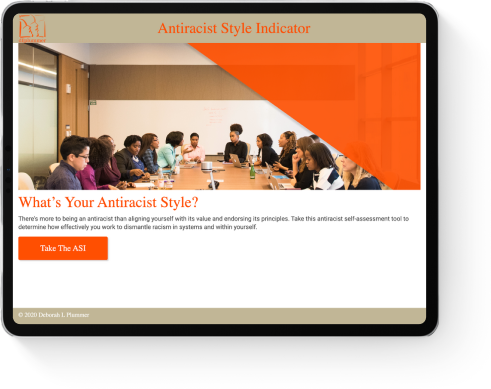
AntiRacist Style Indicator

image

What’s Your Antiracist Style?

There’s more to being an antiracist than aligning yourself with its value and endorsing its principles. Take this antiracist self-assessment tool to determine how effectively you work to dismantle racism in systems and within yourself.

Watch the Video

Take The ASI

Discussion Highlights

Readers reflect on the balance between underfunctioning and overfunctioning anti-racists, emphasizing the value of self-awareness, effectiveness, and actionable steps to contribute toward racial equity. Many expressed appreciation for tangible strategies and the emotional resonance of the article.

“I find your insights on underfunctioning antiracists very helpful.” — Camila Perkins

“This is the best overall, most concise, most grounded discussion of anti-racism efforts I’ve ever read. Thank you.” — Rick Freed

“I think we can all do an additional thing along with the 5 above: Speak up again injustice, whether if we are the bystanders in a situation or simply as the newsreaders. Though it sounds obvious, I believe this is the era of us being more active about racial issues and stand up for what’s right in order to end the racism mindset. I sometimes hear people in my family talk and behave as white supremacists even though we are Asian. I am having a hard time helping to educate and explain the bigger purpose behind movement like Black Lives Matter. An open mind and patience have been my virtue in doing so. Though we have gone a long way to where we are right now, but we still have a long way to go. A little by little, it’s for a better future.” — Kennedy Nguyen

“‘Despite my years of research and teaching how to communicate effectively across differences, I am still often gobsmacked in the presence of racial tension and find myself underfunctioning due to the complex nature of contemporary forms of racism.’ I can relate to this feeling. Even though my academic background is in Intercultural Communication and I have lived in 5 different countries, even though I have been an active advocate for Equity, Diversity & Inclusion and am not shy to speak up, it sometimes is still hard to handle racial tension when it is in the room, because we are just more vulnerable as POC.” — Pricilla Cheung

“After reading this article, I have to admit that for the better part of my adult life, I was an over-functioning antiracist, and it was exhausting! Since doing a lot of my research, development, and schooling on racism, I have attained more balance toward being a healthier functioning antiracist where I don’t have to expend my emotional and mental energy. I love the way Dr. Plummer expressed this, ‘I learned to focus on being effective rather than just right…over time, I could establish a pattern of being both right and effective — a win/win all the way around.’ Another important message I want to comment on is the reminder that we ALL have work to do. As a woman of color, I cannot afford to wait around for white people to acknowledge their white cultural membership and privilege as permission for me to live my life to it’s fullest potential. It’s not a waiting game. I have to do what I do best and then hope for the best in others.” — Dania Rivas

“The list of tangible changes that we can all make in order to be antiracists is so very important. I think the most scary part of speaking out about what is happening is not knowing what to say or where to start. These 5 steps that are outlined are real and tangible ways in order to make the move forward to equality that we all so desperately need. I love the onion example that is very important in realizing intersectionality and the combination of the multiple identities that we all possess. The power of conversation starts with the realization of where we are and WHO we are.” — Olivia West

“This is such an important conversation to have for allies and marginalized groups. To be agents of change we must do the work it takes to identify how we contribute to racial inequity and how we can check our mentalities and behaviors that work against the quest for equality. I also love that this blog not only encourages self-critique but it also provides realistic solutions and suggestions for correcting those counterproductive behaviors.” — Raven Bailey

“I’m not sure I could have appreciated this article any more. I was able to resonate with the underfunctioning anti-racist dilemma, recall personal encounters with overfunctioning anti-racists, and move into a better understanding of what it means to be a functioning anti-racist. As is suggested in the article, neither under- nor over-functioning anti-racists are as effective in their fight against racial injustice as they hope to be. Rather, the description of functional anti-racists provided a picture of what effective anti-racism looks like, and I especially appreciated the five things we can do in the next six months (and beyond) to be better anti-racists.” — Anonymous

“Absolutely, 100% correct. As all of these things are going on: protests, riots, and the killing of Black women and men, I wonder just how much some of these ‘nice’ people are true anti-racist?” — Marla H.