As a newly minted psychologist, I read Harriet Lerner’s The Dance of Anger, a self-help book targeted toward women that popularized the concepts of overfunctioning and underfunctioning behaviors rooted in the scholarship of marriage and family therapy.
In general, overfuntioners tend to rush in to fix a problem, give unsolicited advice and present themselves as an expert on the lives of others as well as their own. Underfunctioners tend to invite others to solve problems because the greater the problem is, the more they stress out and become less competent. Being overwhelmed by an issue, they avoid and ignore the problem.
Most people consider themselves to be anti-racist and recoil at any connection to being called racist. But there’s more to being an anti-racist than just aligning yourself with its value and endorsing its principles. Unwittingly, racial equity can be stifled by well-meaning underfunctioning anti-racist and interrupted by zealous overfunctioning antiracists.
Racism exists and persists. As a result, it is easy to fall into being an underfunctioning anti-racist because racism is so expansive. Racism makes us feel uncomfortable and overwhelmed. Despite my years of research and teaching how to communicate effectively across differences, I am still often gobsmacked in the presence of racial tension and find myself underfunctioning due to the complex nature of contemporary forms of racism.
I’ve also done my share of overfunctioning and notice the pattern in other well-intentioned anti-racists. Because racial equity is often an emotional and value-laden issue, it’s easy to become a flame throwing anti-racist who ignites more fires and keeps them ablaze rather than putting them out.
Here’s some characteristics of underfunctioning anti-racists:
Underfunctioning anti-racists go into flight mode when faced with racial tension.
We all have a natural tendency to flee when someone starts to talk about racism or a situation happens with racial overtones. The queasy stomach, looming headache, rise in blood pressure or percolating vomit are physiological triggers we get under stress that signal it’s time to leave the room or change the subject. Without the energy, necessary competencies to deal with the situation effectively, or the courage it takes to manage it, we become limited in our choices on how to respond, and often choose to do nothing.
In conversations with some of my white friends, I regularly see white flight in action. When I bring up racism as it is manifested in the criminal justice system, voting rights, healthcare disparities, or the education or wealth gap, they say, “Let’s not talk about politics anymore.” They don’t understand why I shake my head and just laugh. “I thought we were talking about racism,” I tell them. Racism, from their perspective, is considered politics, a taboo, controversial topic that is personal and that should be kept private.
I understand this inability to talk about racism as it is the by-product of the unexamined racial identity of many white people and the social privilege that allows whites to dissociate themselves from racism. As a result, whites remain unwitting students in the course on racial dynamics, forced into the classroom only through racially-charged events such as the murder of George Floyd and other unarmed black men by police officers.
Underfunctioning anti-racists minimize the effects of racism and its existence in contemporary society.
When whites think about racists as being only members of fringe groups, vote for people of color as elected public officials, enjoy movies, tv shows, music, books, and art by actors, entertainers, authors, and artists or color, live in predominantly white neighborhoods, and work in predominately white environments, it’s easy to fall into thinking that racism is a phenomenon of the past.
When people of color enjoy privilege attached to their social identities of class, age, mental/physical ability, sexual orientation, and religion, it becomes easier for them to attribute racism to individual behavior rather than structural and systemic racism.
For example, instead of focusing on the patterns of systemic racism that are the root cause of police violence against unarmed African Americans, this kind of underfunctioning minimizes it to be just a few “bad apple” cops rather than indicative of a law enforcement culture that is riddled with racism and lacking any accountability for these violent crimes.
Couple these characteristics with an optimistic personality type, political naiveté, or tendency toward pollyannaish type thinking, and many easily fall into this type of underfunctioning.
Underfunctioning anti-racists equalize racism’s impact.
This type of underfunctioning assumes there’s a level playing field when it comes to access and opportunity, and that social privilege isn’t tied to race but to individual behavior. It believes in meritocracy and that if you work hard, do the right thing, act in a civil manner toward others (especially law enforcement) success and justice will follow. Racism is a personal attitude or prejudice rather than manifested structurally in policies, practices, and procedures that disadvantage certain racial groups and that benefit whites.
Here’s an example from one of my research survey respondent: “My dear friend of many years, once said to me, every single person on this earth has been discriminated against at one time or another. No single race has not been enslaved at one time or another. Race is a multi directional street. Lois was the first black female technician [there]. She was the most honest person I ever met. We are all God’s children! Too many People are quick to use the word racism. Belief in the fact that we are all God’s children is primary!”
Underfunctioning Anti-Racists often are ignorant of the history of racism, surprised by its negative impact, and confused by their own perceived racist behavior.
Resistance to acknowledging racism comes in many forms and is most often manifested by individuals who are ignorant of historical facts, current events, or contemporary scholarship on race, or who simply feign ignorance when held accountable for their actions.
In today’s reality, many people of color have abandoned their commitment to white comfort in regards to racial dynamics and now hold whites accountable for their behavior. Amy Cooper, the Central Park dog walker, apologized stating that she called the police as a protection agency not realizing that “there are so many people in this country who do not have that luxury.” Not understanding racial dynamics in its historical and current context and developing competencies to effectively navigate our increasingly multiracial, multicultural society is no longer an option.
Here’s some characteristics of overfunctioning anti-racists:
Overfunctioning anti-racists move in quickly to educate others.
Like a lifestyle evangelizer who wants to convert you to a better life or a wise professor who educates you using historical background, empirical data and dramatic stories of lived experience, an overfunctioning anti-racist recognizes racism in its many forms and attacks them like in a whack-a-mole game.
Early in my career as a university professor, a student mistook me for the department secretary and asked me to make copies of handouts at the request of one of my colleagues. I responded in an instant with all of the thunderous roar of a Sunday morning evangelist’s sermon unloading information on the layers of racist hiring practices, mentoring practices and conscious bias that led to his ill-conceived assumption that I could not be a professor, repeatedly quizzing him about what he saw that led him to believe that I could not be Dr. Plummer, just as the sign on my door clearly indicated. That student might still suffer from a bit of PTSD today and is most likely very careful whenever he approaches a black woman. I still regularly pray for him.
Overfunctioning anti-racists are quick to go into fight mode when someone disagrees with them.
I once joined an active thread of comments on Facebook in response to this post written by another black woman:
“White women have a unique form of currency. They are worshipped. They are both fire starters and fire extinguishers when it suits them to be. They are always given a platform and are afforded forgiveness even when they are egregiously wrong while Black women have to fight to be seen, heard and have our concerns addressed. And then we get belittled and criticized when we do.”
From my lived experience working with white women in white male-dominated organizations, I saw the statement as painting with very broad brush. My response was simple: “I don’t agree with this.” The response came quickly from the poster: “And you’re welcome not to. They are plenty of black white supremacists. They’ll be happy to have your support.”
I had witnessed the voices of white women and women of color shut down and have to fight to be heard by white men and men of color. What I was hoping from the dialogue provoked by the statement about white women was a bit of untangling of the process that sets up these dynamics. Perhaps too big of a hope for a Facebook thread, but I wasn’t expecting to be dismissed as being a black white supremacist for disagreeing.
Overfunctioning Anti-Racists put more emphasis on being right than being effective.
Two goals of anti-racism work are 1) to eradicate racism by eliminating institutional structures, policies, practices and procedures that discriminate against people or color; and 2) to change attitudes about power and privilege so that there’s equal access and opportunity for everyone. These goals aren’t achieved solely through advocacy. And advocacy requires specific strategies aimed toward effective outcomes.
As a chief diversity officer, I recall being in a meeting where a senior executive expressed racially misguided beliefs that would invariably enter into his decision making process on hiring practices and the strategic direction for the organization. I learned early in my career that directly calling out racism during workplace meetings, especially when it comes from the CEO, wasn’t the wisest thing to do. From an advocacy perspective, it might be the right thing to do, but strategically it was never effective. Yet, away from the “teachable moment,” working to implement inclusive practices held less effectiveness because expressed racist attitudes and beliefs remained at its foundation. As a seasoned diversity practitioner, I learned to focus on being effective rather than just right. It was a longer process to uncover the racist beliefs by unraveling the intention while sharing the impact of the words and actions, but in the long run, it was far more effective for me professionally and for the organization in reaching its inclusion goals. Over time, I could establish a pattern of being both right and effective — a win/win all the way around.
Overfunctioning Anti-Racists are convinced that racism will be eradicated only when white people acknowledge their whiteness and become supportive allies to people of color.
Racism is an ugly phenomenon that exists like a cancerous tumor in our environment. It comes in many forms, threatens our existence, and erodes our capacity to develop and grow. We all have to work, collectively and individually, to eradicate racism. As whites and people of color, we have different work to do, but everybody has to work to eradicate racism.
Whites have to resolve their racial identity by shedding racist thinking, relinquishing an entitlement that has been deeply internalized, and working to dismantle structures that keep racism alive. The identity of “white” with “racist” is not a fixed status attached to skin color, inescapable and intrinsic to a white person’s identity.
Conversely, people of color’s identities are not shrouded in racism with no positive resolution save for the eradication of racism. Ironically, believing otherwise promotes a white-savior narrative: people of color can only achieve their human fulfillment and a healthy quality of life if whites release us from their racist behaviors and thinking.
Institutional and personal racism exists, and indeed black people experience racism all too often. Yet racism has never defined us as a people. Black Americans are a people of deep racial consciousness and high racial esteem rooted in agility, creativity, wonder, and stamina. Black Americans evolved to this identity through our own psychological work and not because whites simply changed their minds and decided that black people were now acceptable human beings.
Questioned by a white participant in a continuing education course on Advancing Inclusion on why I had not included the book White Fragility on my reading list, I responded because the framework presented in the book was not aligned with the relational model that I teaching in the course. She became very angry with that response and told me that even though she appreciated and even agreed with much of what I had taught that week, she felt my work was discredited by the fact that I didn’t believe that racism was purely a white people’s problem to fix as purported in the book. Go figure!
Functioning Anti-Racists
Functioning anti-racists are effective disrupters and eradicators of racism who turn us and them into we. Being functioning anti-racists requires cultural humility that positions us for life-long learning, self-critique and self-evaluation in order to fix power imbalances and achieve racial equity.
Whites and People of Color, individually and collectively, work toward understanding themselves as racial beings characterized by a high level of fluidity and intentionality about one’s actions. Functioning anti-racists experience racial identity in its full integration with the many dimensions of human differences and within multiple and intersecting identities that characterize us as human beings.
I have often used an onion as a symbol for understanding ourselves within the context of our multiple and intersecting identities. The onion layers represent the many dimensions of diversity (race, gender, gender expression, ethnicity, age, mental/physical ability, sexual orientation) that make us unique in our human expression. At the core of the onion are the younger leaves from which it sprouts. As humans we share the right to health, justice, education, safety, love and belonging. As humans, we often act out of our layers instead of from our core identity as humans.
Racial equity is in play when one’s core identity is interacting with another’s core identity neither dehumanizing or superhumanizing the other’s humanity. Shedding all of the social, political, cultural and historical baggage, we act as one race, the human race.
For me, this isn’t aspirational thinking but the groundwork for how I use myself as an Anti-racist. Being an anti-racist means knowing there is no easy fix, no one solution, and no miracle cure for racism and that it’s take more than a right attitude to dismantle systems of inequality, oppression and social injustice. It’s life-long hard work that is best done in community with others who share this belief and desire for a just society.
Here are five things we can all do over the next six months to be better antiracists.
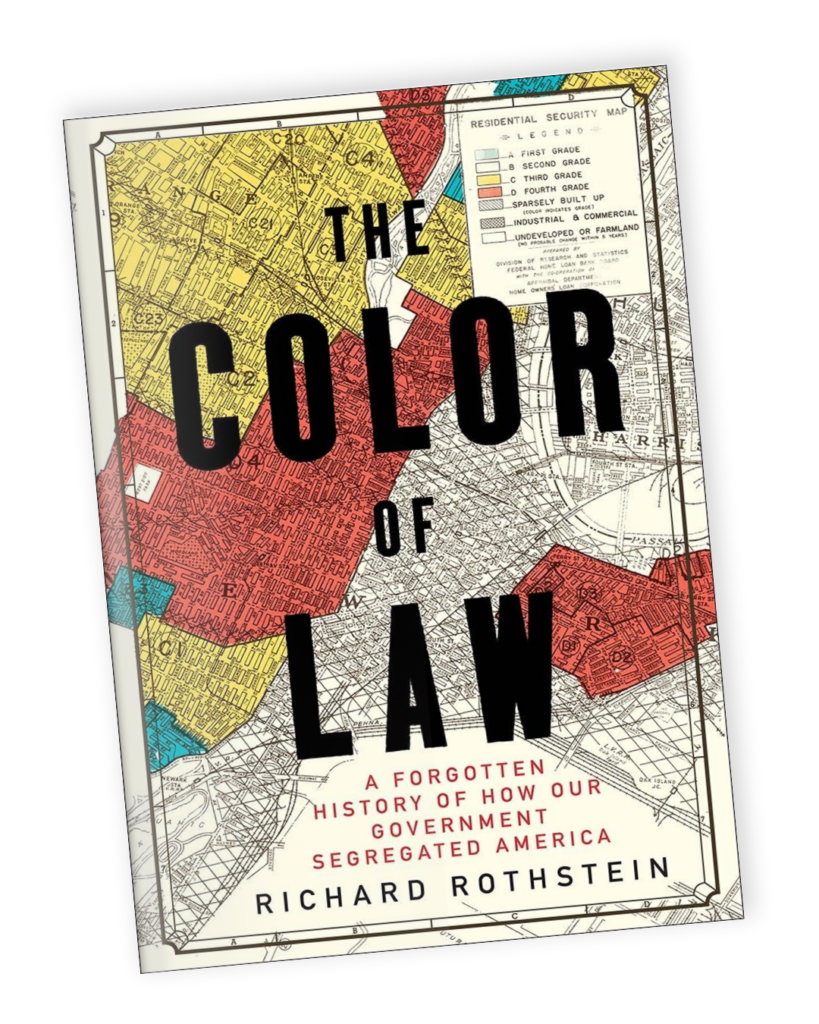
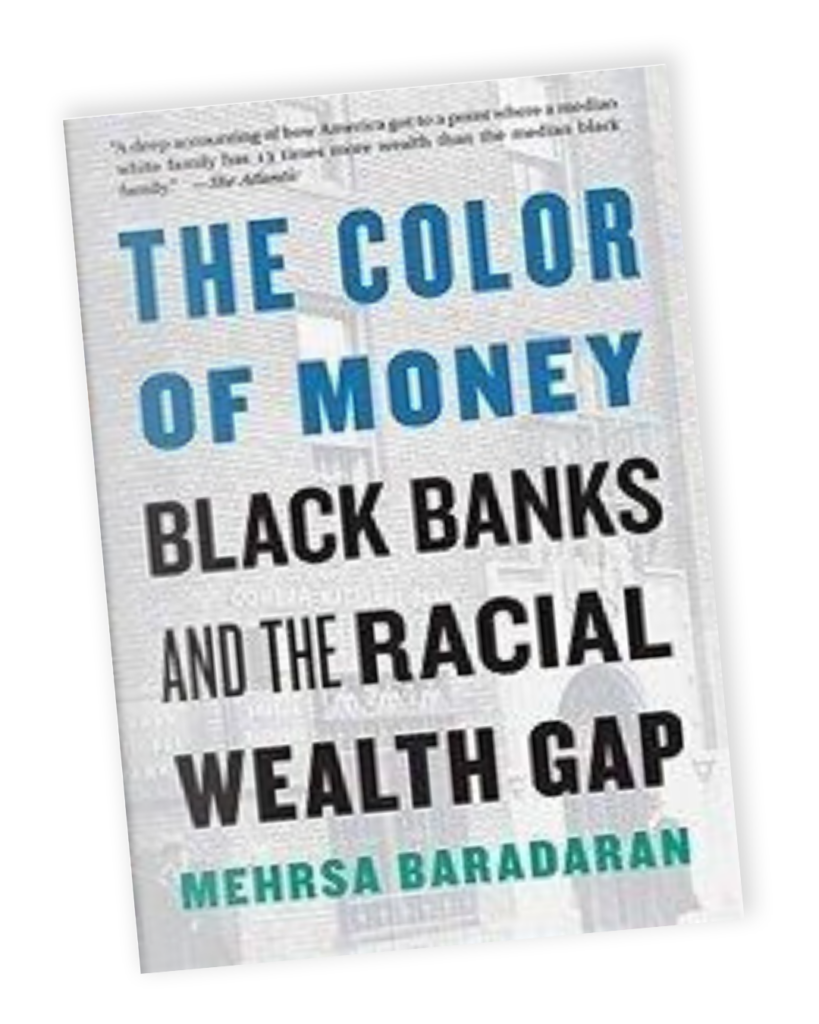
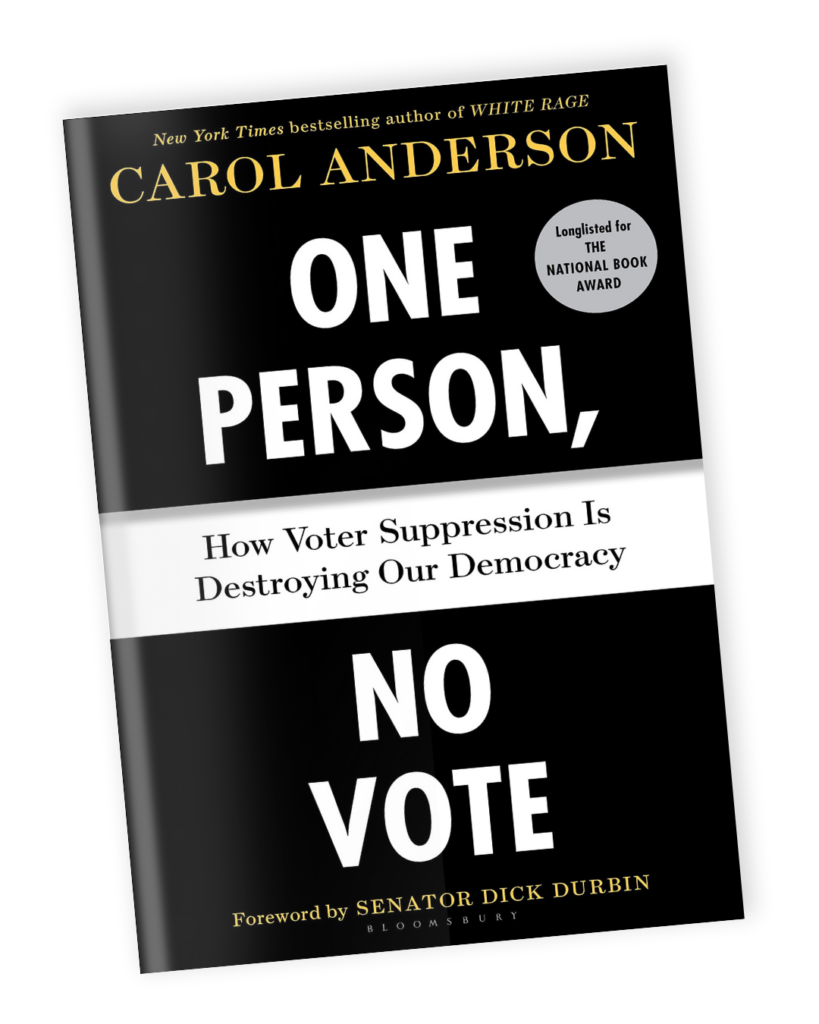
- Read one of these books on racial equity. Share three take-aways from your reading with your family members or friends and social media networks.
- Take the Racial Identity Status Self-Assessment to understand your racial identity resolution process and how your racial identity impacts your behavior and your thinking.
- Write a list of your hopes and concerns for the future of race relations. A hope is something that you want to see happen and a concern is something that you don’t want to see happen but that, in reality, is likely probable.
- Have an honest conversation with a friend of a different race about your hopes and concerns for the future of race relations.
- Vote for candidates with a specific strategy for achieving racial equity
AntiRacist Style Indicator
What’s Your Antiracist Style?
There’s more to being an antiracist than aligning yourself with its value and endorsing its principles. Take this antiracist self-assessment tool to determine how effectively you work to dismantle racism in systems and within yourself.
Watch the Video
Take The ASI
Discussion Highlights
Readers reflect on the balance between underfunctioning and overfunctioning anti-racists, emphasizing the value of self-awareness, effectiveness, and actionable steps to contribute toward racial equity. Many expressed appreciation for tangible strategies and the emotional resonance of the article.
“I find your insights on underfunctioning antiracists very helpful.” — Camila Perkins
“This is the best overall, most concise, most grounded discussion of anti-racism efforts I’ve ever read. Thank you.” — Rick Freed
“I think we can all do an additional thing along with the 5 above: Speak up again injustice, whether if we are the bystanders in a situation or simply as the newsreaders. Though it sounds obvious, I believe this is the era of us being more active about racial issues and stand up for what’s right in order to end the racism mindset. I sometimes hear people in my family talk and behave as white supremacists even though we are Asian. I am having a hard time helping to educate and explain the bigger purpose behind movement like Black Lives Matter. An open mind and patience have been my virtue in doing so. Though we have gone a long way to where we are right now, but we still have a long way to go. A little by little, it’s for a better future.” — Kennedy Nguyen
“‘Despite my years of research and teaching how to communicate effectively across differences, I am still often gobsmacked in the presence of racial tension and find myself underfunctioning due to the complex nature of contemporary forms of racism.’ I can relate to this feeling. Even though my academic background is in Intercultural Communication and I have lived in 5 different countries, even though I have been an active advocate for Equity, Diversity & Inclusion and am not shy to speak up, it sometimes is still hard to handle racial tension when it is in the room, because we are just more vulnerable as POC.” — Pricilla Cheung
“After reading this article, I have to admit that for the better part of my adult life, I was an over-functioning antiracist, and it was exhausting! Since doing a lot of my research, development, and schooling on racism, I have attained more balance toward being a healthier functioning antiracist where I don’t have to expend my emotional and mental energy. I love the way Dr. Plummer expressed this, ‘I learned to focus on being effective rather than just right…over time, I could establish a pattern of being both right and effective — a win/win all the way around.’ Another important message I want to comment on is the reminder that we ALL have work to do. As a woman of color, I cannot afford to wait around for white people to acknowledge their white cultural membership and privilege as permission for me to live my life to it’s fullest potential. It’s not a waiting game. I have to do what I do best and then hope for the best in others.” — Dania Rivas
“The list of tangible changes that we can all make in order to be antiracists is so very important. I think the most scary part of speaking out about what is happening is not knowing what to say or where to start. These 5 steps that are outlined are real and tangible ways in order to make the move forward to equality that we all so desperately need. I love the onion example that is very important in realizing intersectionality and the combination of the multiple identities that we all possess. The power of conversation starts with the realization of where we are and WHO we are.” — Olivia West
“This is such an important conversation to have for allies and marginalized groups. To be agents of change we must do the work it takes to identify how we contribute to racial inequity and how we can check our mentalities and behaviors that work against the quest for equality. I also love that this blog not only encourages self-critique but it also provides realistic solutions and suggestions for correcting those counterproductive behaviors.” — Raven Bailey
“I’m not sure I could have appreciated this article any more. I was able to resonate with the underfunctioning anti-racist dilemma, recall personal encounters with overfunctioning anti-racists, and move into a better understanding of what it means to be a functioning anti-racist. As is suggested in the article, neither under- nor over-functioning anti-racists are as effective in their fight against racial injustice as they hope to be. Rather, the description of functional anti-racists provided a picture of what effective anti-racism looks like, and I especially appreciated the five things we can do in the next six months (and beyond) to be better anti-racists.” — Anonymous
“Absolutely, 100% correct. As all of these things are going on: protests, riots, and the killing of Black women and men, I wonder just how much some of these ‘nice’ people are true anti-racist?” — Marla H.