Donate now and together we’ll turn us and them into we. We also accept stock donations!

Discussion and Reflection: Bridging Difference in Community

Bridging difference is at the heart of Getting to We’s mission. It begins with honest conversation—listening to understand rather than to respond.

We’ve seen how reflective dialogue transforms communities. When people gather to share their stories and sit with discomfort, trust begins to take root. Reflection turns talk into transformation.

Our Social Trust dialogues and retreats are built around this idea: that community grows stronger not by erasing disagreement, but by staying present through it.

Each time we pause to listen deeply, we plant a seed for understanding.

Bridging difference isn’t a one-time event—it’s a lifelong practice. The courage to engage, to stay curious, and to believe in collective healing is how we turn dialogue into progress.

What practice helps you bridge differences in your community? Join the conversation below.

Beyond Diversity Training: Building Trust in Real Time

Formal training is a starting point, not a solution. At Getting to We, we’ve seen again and again that the true work of inclusion happens afterward—when people turn awareness into action.

Trust is built in real time: when leaders follow through on promises, when colleagues give honest feedback respectfully, when accountability is practiced with care. These everyday interactions create the culture that training can only begin to describe.

Inclusion doesn’t live in workshops; it lives in relationships. It grows when organizations commit to transparency, active listening, and shared responsibility.

The practice of equity is not theoretical—it’s lived, moment by moment.

Our work focuses on helping organizations sustain that practice long after the slides close—transforming intention into impact, and awareness into action.

What daily actions help build trust in your organization or community? Share below.

Words Create Worlds: How Language Shapes Belonging

Language is the architecture of connection. The words we choose determine who feels seen, who feels excluded, and how deeply we trust one another.

At Getting to We, we view language as a tool for belonging. Our words carry values—whether we acknowledge it or not. A casual comment can close a door; an intentional phrase can open one.

We teach teams and communities to listen to their own language: Who does this include? Who does it silence? What assumptions lie within it?

Each reflection becomes an opportunity to align speech with empathy.

Inclusion begins in the sentences we speak. By choosing words that reflect care, curiosity, and respect, we create spaces where everyone belongs—and that’s where transformation begins.

Words Create Worlds Award

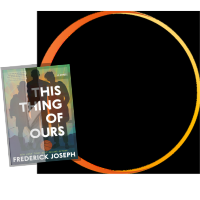
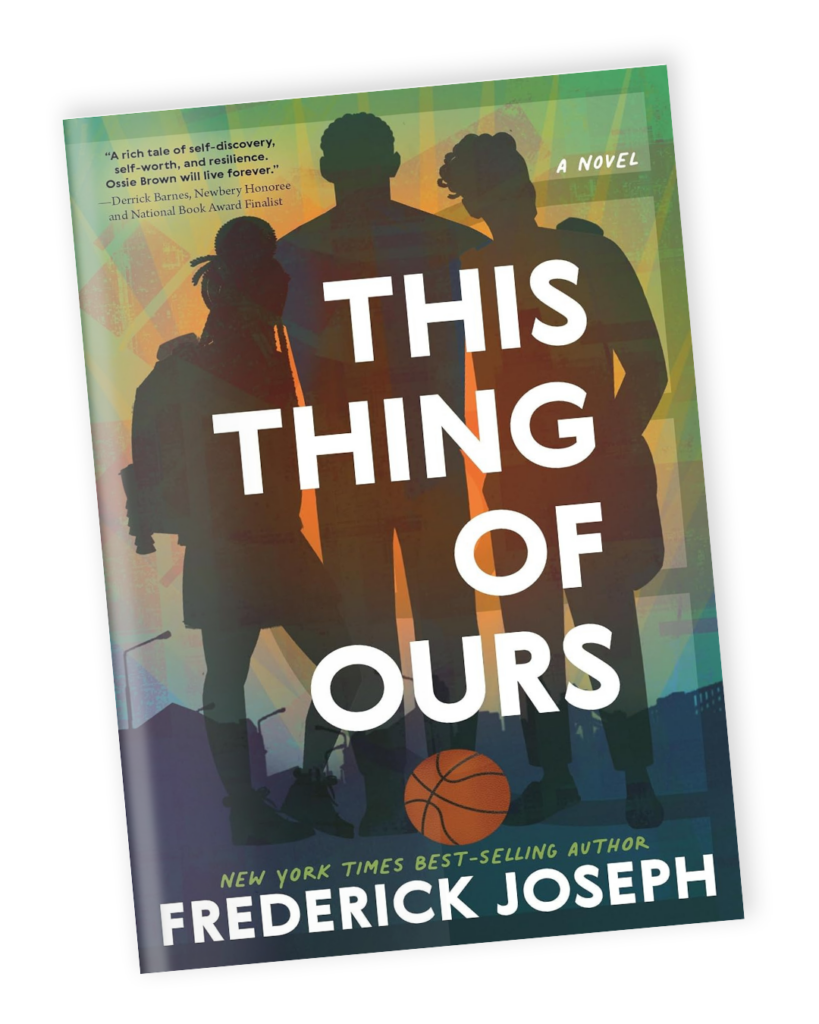
Congratulations to 2025 Words Create Worlds Award recipient Frederick Joseph, Author of This Thing of Ours. Joseph’s writing is timely in its presentation as a rallying cry for injustice that comes from the voices of young adults who meet the challenges of the time with real courage and as models for what it means to be an upstander.  

The book’s themes elevate the power of storytelling and the written word in such a refreshing way in an era where social media often presents ideas in fragmented, biased ways that flatten the nuances inherent in these complex issues.  

As a YA book with adult themes, it’s accessible across all ages and one that can and should be discussed in schools and universities, across family dinner tables, and in every kind of book club from traditional to “boozy” book clubs.

Past Award Recipients

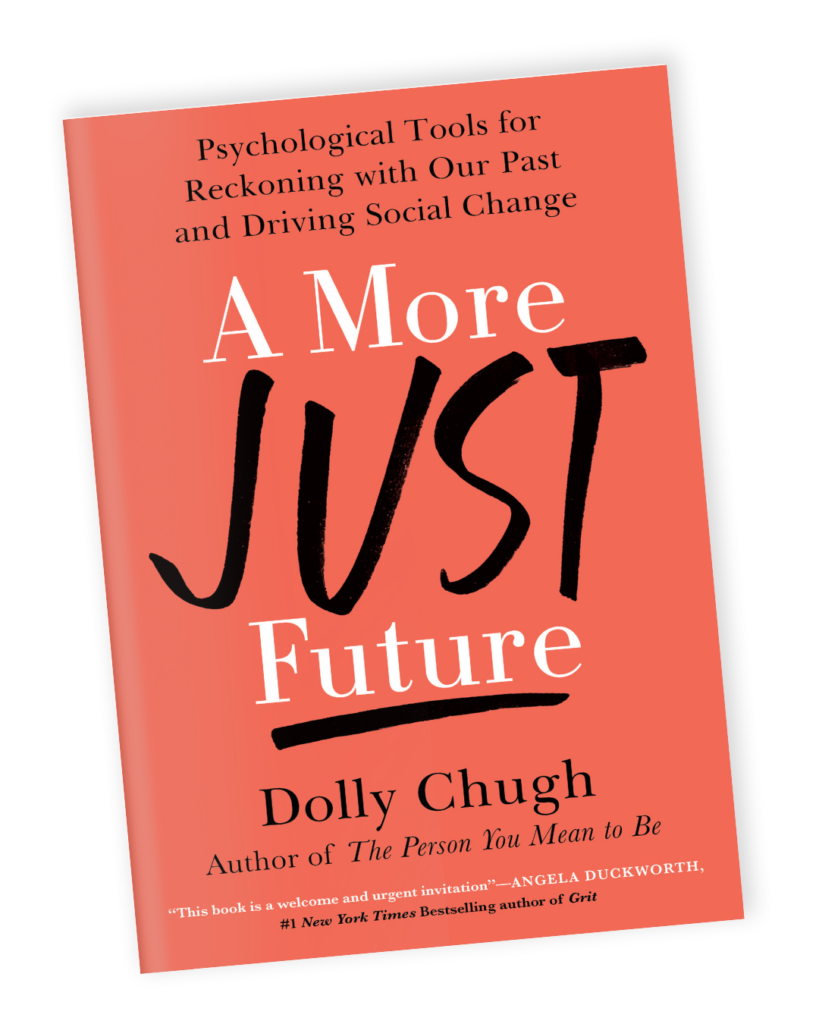
Dolly Chugh, A More Just Future

Dolly Chugh, A More Just Future

Jonathan Eig,  MLK: A Life

Jonathan Eig, MLK: A Life

Christine Pride and Jo Piazza,  We Are Not Like Them

Christine Pride and Jo Piazza, We Are Not Like Them

We encourage nominations of writers whose work inspires us to practice Me to We skills.

How have words shaped your sense of belonging? Share your reflection below.

Micro Moments: The Art of Everyday Trust

At Getting to We, we talk often about “micro moments”—those seemingly small actions that shape how safe, valued, and connected people feel. These are the quiet threads of trust that hold communities together.

Holding a door. Remembering a name. Listening fully before responding. Each of these micro moments sends a signal: You matter. Over time, they become a language of care, a rhythm of belonging.

Trust is built not in a single breakthrough, but in the accumulation of these moments. They teach us to be present, to honor vulnerability, and to practice empathy in real time.

Through our Social Trust workshops, we’ve seen how micro moments transform cultures. When individuals choose empathy and reliability again and again, they reshape entire environments—workplaces, families, and communities alike.

What small gestures of trust have made a big difference in your life or work?

A Half Dozen Lessons from Publishing: What We’ve Learned About Sharing Voice

Writing is both a craft and a calling. In our years of publishing and storytelling, we’ve learned that the work of sharing ideas mirrors the work of building trust: it takes patience, collaboration, and courage.

Here are six lessons we carry with us:

  1. Rewriting reveals truth. Revision isn’t correction—it’s discovery. The process itself sharpens understanding.
  2. Rejection is redirection. Every “no” reshapes the path toward what’s most aligned.
  3. We write what we need to understand. Curiosity leads the way to clarity.
  4. Collaboration strengthens clarity. Others see what we can’t; trust deepens through dialogue.
  5. Representation matters. Diverse voices shape our shared story.
  6. Purpose outlasts publication. Words have life beyond the page—they live in reflection, conversation, and change.

Publishing is, at its core, relational. It invites us to listen as much as we express—to make the invisible visible. Every story we share at Getting to We is an act of trust, extending an open hand to those ready to join the dialogue.

What lessons have you learned about sharing your story? Reflect below.

Some of My Friends Are… Building Real Connection Across Difference

We’ve all heard it—or maybe said it ourselves: “Some of my friends are Black.” “Some of my friends are White.” These words are usually offered as reassurance, but they often reveal something deeper—a desire to connect without confronting the complexities of difference.

At Getting to We, we believe friendship across difference is one of the most powerful acts of trust-building. It’s not about having diverse friends—it’s about building relationships grounded in honesty and accountability. Proximity doesn’t build understanding; vulnerability does.

Real connection means listening without defensiveness, admitting when we don’t know, and staying in the conversation even when it’s uncomfortable. These are the small acts of courage that transform social trust from theory into lived practice.

Cross-racial friendship becomes a microcosm of equity itself—a space where empathy meets truth, and where love refuses to hide behind politeness. When we commit to showing up with openness and courage, we model what it means to move from me to we.

What courageous act of honesty has strengthened your relationships? Share your story below.

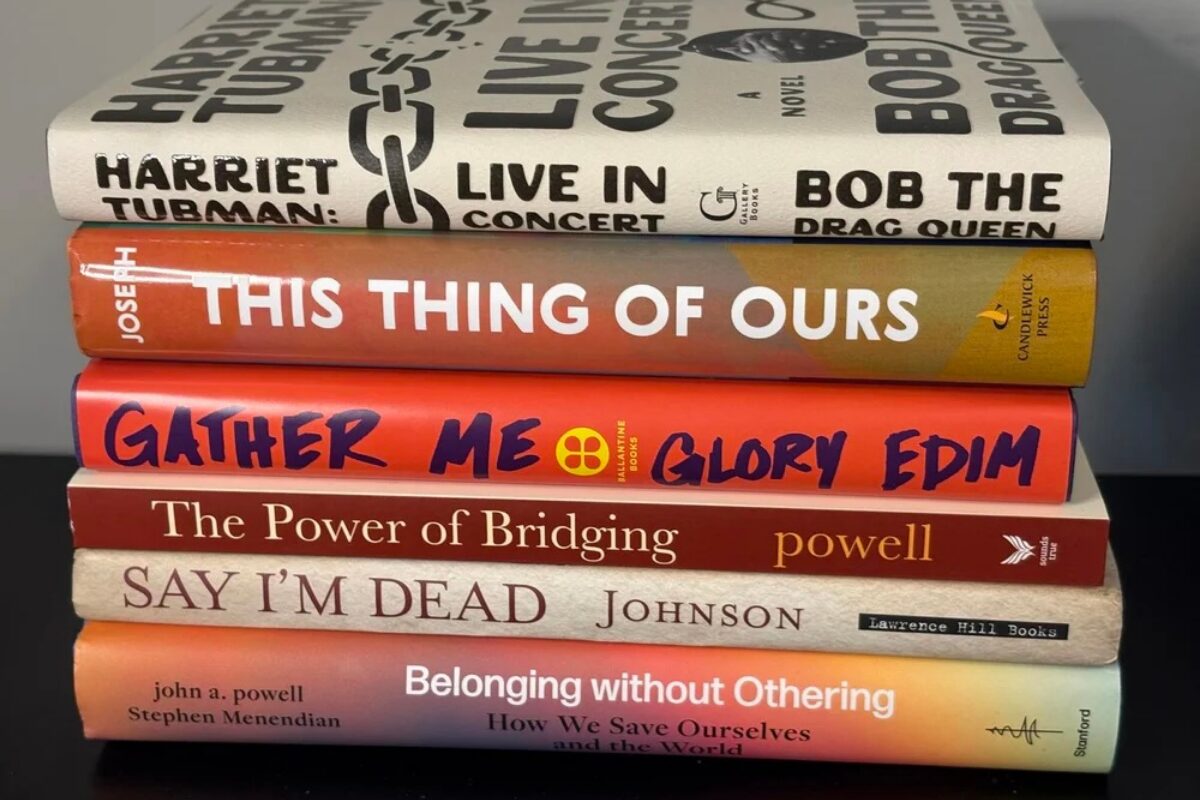
Getting To We Books for 2025

Here are some great reads for 2025 that inspire us to turn us and them into WE in places where we live, work, serve, worship, and socialize.

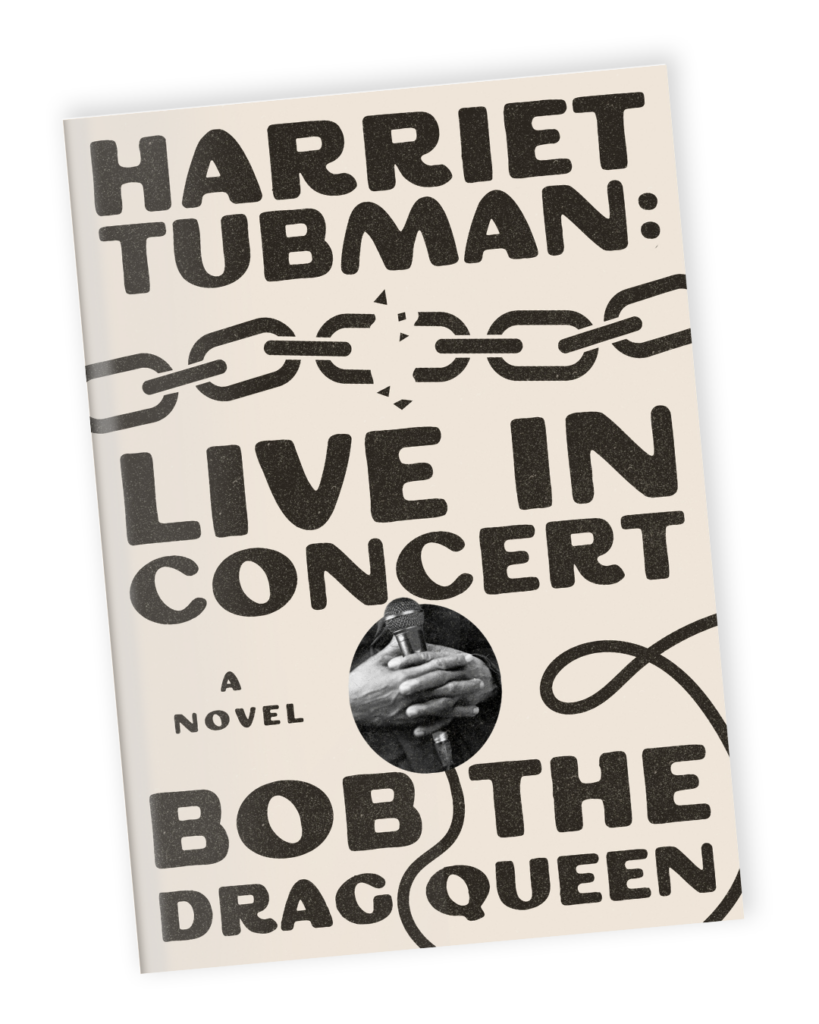
Harriet Tubman: Live in Concert by Bob the Drag Queen

If the title and author makes you go ‘Hmmmm…” then reading this book will make you go “WOW”. With creativity, wit and brilliance by author Bob the Drag Queen, historical abolitionist Harriet Tubman magically comes back and wants to create a hip-hop album and live show about her life . She engages Darnell, a hip-hop producer and song writer who once was on the top of the charts until he is backstabbed in the industry. Together, Darnell and Harriet and her team of musicians remix history in a way that you will learn, laugh and be in awe.

This Thing of Ours by Frederick Joseph

This is a YA (young adult age 12-18) novel with themes that resonate with adults from 18 through seniors. Seventeen-year-old Ossie Brown, was once the future LeBron James at his affluent, predominately
White private school until a torn ACL ends his basketball career . With the help of a Black teacher he pivots to a prestigious Mark Twain Writing Program in the school. Told through powerful conversations and with scenes that put the reader in them, Ossie is deluged by the flood of anti-woke students and parents. The revolution and resolution will give you hope for the future and confidence in Generation Z.

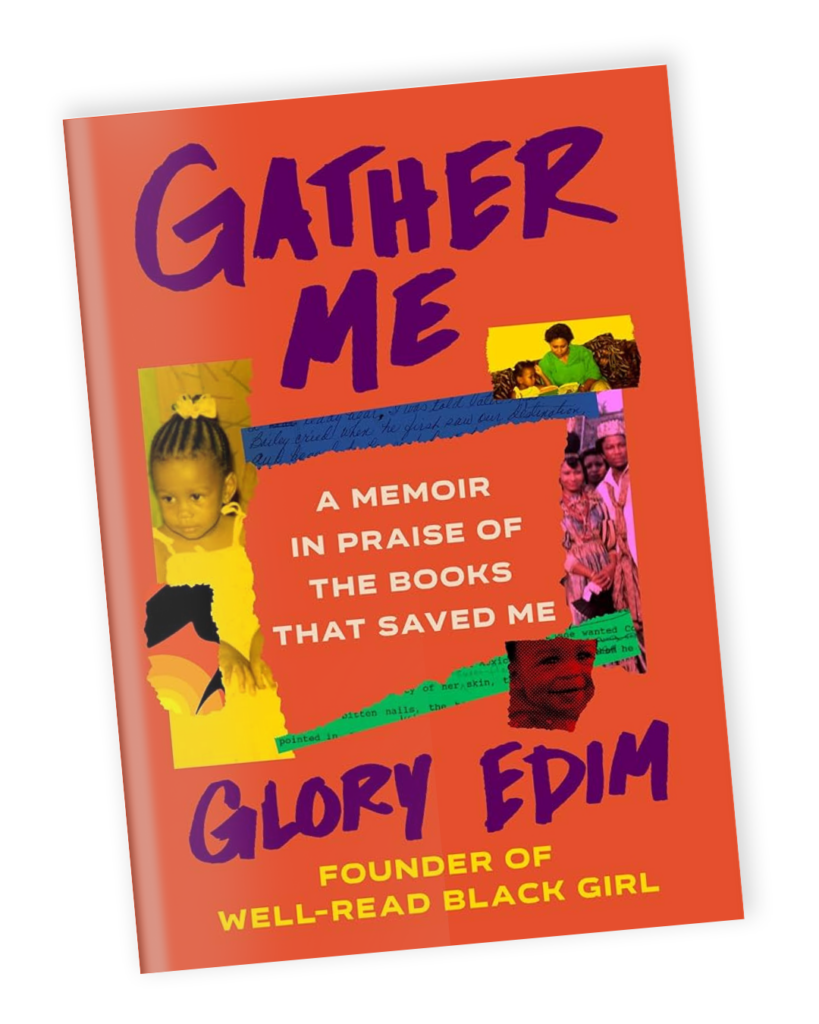
Gather Me: A Memoir in Praise of the Books That Saved Me by Glory Edim

Great memoirs have a relatable narrator, a strong narrative arc, vivid scenes, and a clear thematic focus, all presented with honesty and vulnerability. Give Glory Edim an A+. Edim is the founder of Well Read Black Girl, a literary community dedicated to Black women. The anthology of the same name and her memoir resonate with anyone who is a book lover, has experienced the career challenges, gone through a few relationship issues, knows the ups and downs of parenting and just getting through life.,

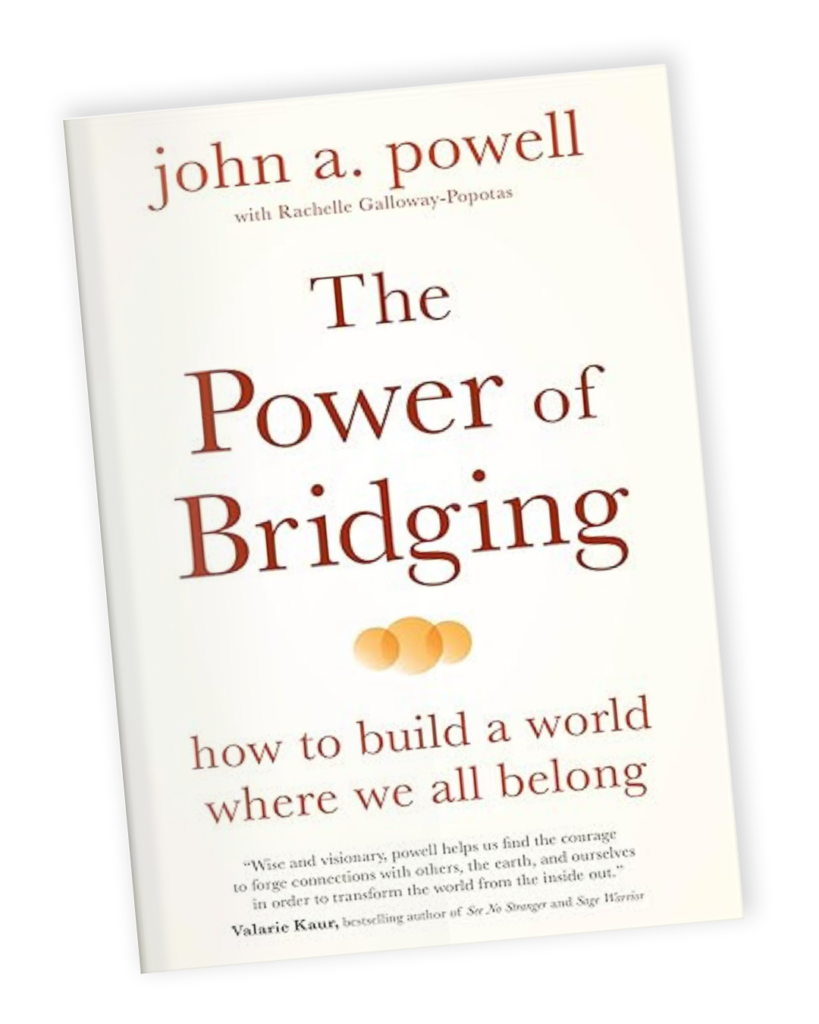
The Power of Bridging: How to Build a World Where We All Belong by john a.powell

john a. powell, Director of the Othering & Belonging Institute at U.S. Berkeley, describes bridging as “a salve for out fractured world.” In this instructive and inspiring book he shares his own journey to belonging, helps us to understand just exactly what is belonging. He makes a strong argument for the power of bridging and how to be a breeder in today’s polarizing society. This book could not be more aligned with Getting To We’s mission, vision and values.

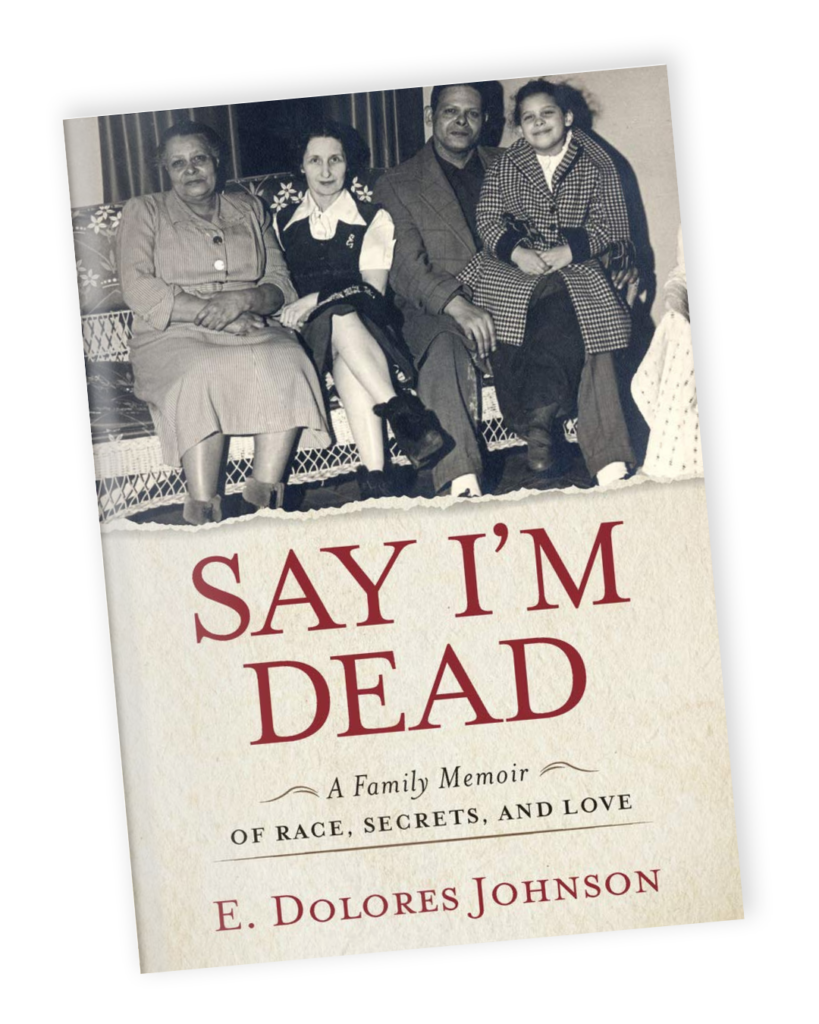
Say I’m Dead: A Family Memoir of Race, Secrets, and Love by E. Dolores Johnson

Today, in the U.S., about 17% of newlyweds are in interracial marriages.. That’s 1 in 6, a significant increase from the time when Johnson’s parents married in 1942.. I have had this book on my shelf for years and picked it up now with the hope that it would have rich nuggets for how we come together across racial lines on an interpersonal level that would lead to a positive impact on a group and societal level. This book doesn’t disappoint. With instructions to say that she “was dead,” Johnson’s White mother reluctantly gives her permission to research the White side of her family in her effort to understand her racial identity as an adult biracial woman. Successful by every other marker in her adult developmental process, having this information is critical to her understanding of her full identity. Through her racial identity resolution process Johnson demonstrates the power of truth and reconciliation.

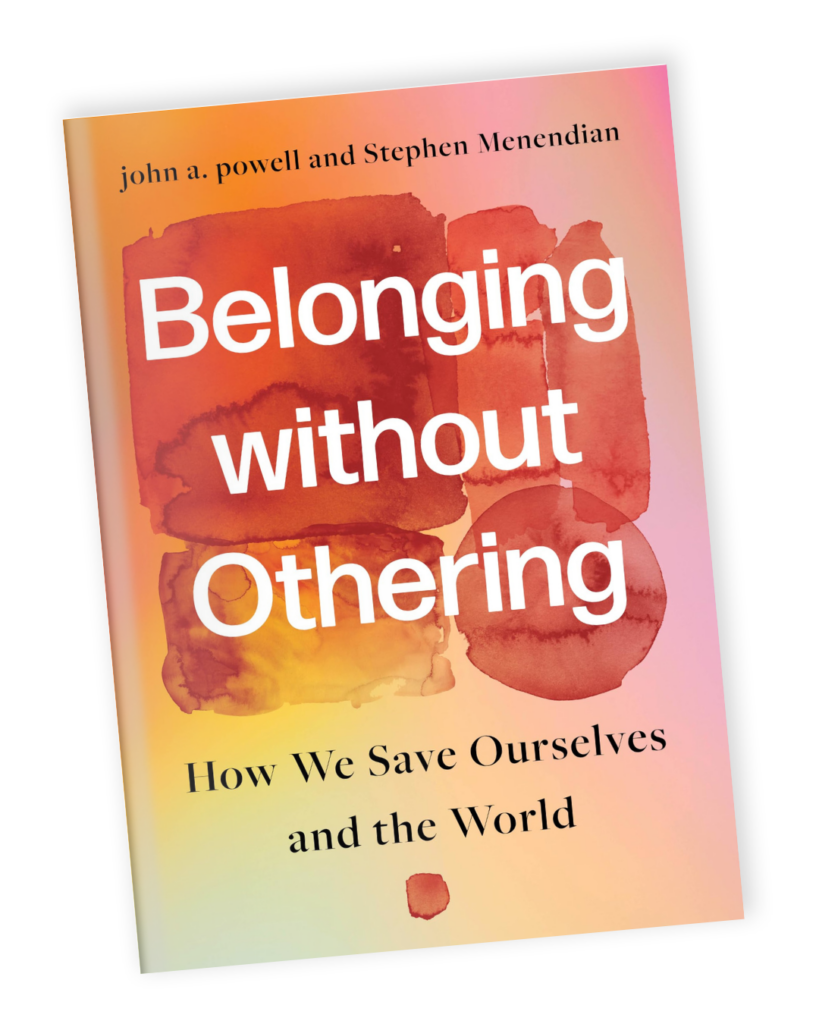
Belonging Without Othering: How We Save Ourselves and the World by john a.powell and Stephen Menendian

The subtitle says it all. A companion to The Power of Bridging, Powell is joined by colleague Memndian in a thorough and academically substantive understanding of justice in the context of belonging and othering. It is inspiring call to action for anyone interested in making a more just and inclusive society.

The Power of Memory Work: Learning from the Germans

A negative Covid test under any circumstances is cause for celebration but I was especially thrilled to see only a marked C strip on the test card after a week of Covid symptoms. It meant that I was clear to take a long-planned trip to Berlin as part of the Visiting Program of Widen the Circle. Widen the Circle’s mission is to combat hate through a shared understanding of the past. The Visiting Program is one of their signature initiatives designed to build bridges between educators and activists in the U.S. and Germany. Thought leaders on both sides of the Atlantic are invited to the program to use the power of the local history to learn how to combat racism and prejudice as well as deal with the historic legacies of injustice.

I was honored to be a part of this learning and personal growth experience, but I gotta tell you, the program was intense—not only in its schedule but in the learning. We visited numerous memorials and historical sites. The week-long program included a visit to Anne Frank museum, a walking tour of central Berlin Jewish quarter, a tour of West Berlin Jewish history, a visit to the House of the Wannsee Conference (the site of the meeting where senior Nazi bureaucrats organized “the Final Solution to the problem of the Jews”), an inspiring and moving visit to community school and a deportation site memorial with Sabeth Schmidthals, walking tour of Leipzig and Erich Zinger House, a hike (literally) of historical sites related to the Nazi period deportation of Jews, a visit to Döbeln meeting young activists, seeing the award-winning Yellow Brick Memory Project that inspired the work of Bryan Stevenson and others in the U.S., meeting with Citizens for the Badehaus (one of the largest displaced persons camps for Jewish survivors in post-war Europe), and visiting a center for refugees. WHEW!

Our program text was Susan Neiman’s Learning from the Germans, which I would highly recommend and a number of other books, podcasts, and articles.

Although I am still unpacking the experience, here’s a bit of what I learned from the program:

The Power of Memory Work Lies in Connecting the Past to Present:

As a psychologist, I conceptualize memory work as a process for how we acquire, store, retain and retrieve information. As a methodology used by German researchers and activists, memory work is a process of engaging with the past in an accurate and ethical way. For memory work to have sustainable impact, accurate recording of history not only has be available in books, memorials, and artifacts, but we have to experience the learning in such a way that we connect the past to the present. Connecting the past to the present isn’t a cerebral exercise. We have to have meaningful dialogue with others about how we’ve received, interpreted, and connected that information to our own lived experience. The power of memory work lies in identifying the similar threads from the past in order to create a better future for all of us. We need to ask, How does this historical pattern show up today? Susan Neiman’s book does a masterful job of showing how Germany’s efforts to atone for the crimes of the Holocaust are being, and can be used, in the U.S. as we deal with our horrid history of enslavement of people of African descent and the colonization of Indigenous People.

Felt History or Emotional History Remind Us That People Make History:

In many ways, keeping the memory of the people who lived these truths alive is just as important (or even more important, in my humble opinion) as what gets recorded in history books. The bios behind each of the Stumbling Stones found in Germany and all over Europe are gentle and powerful reminders that people make history. Keeping the memory of those who walked the paths in those traumatic and horrific times is critical to our understanding of how communities are shaped today. In many ways, the U.S., particularly the Deep South, is still working through the strong and intense emotional reaction to the brutally murdered, 14-year-old Emmett Till by White Supremacists, and whose body was left disfigured in his open casket at the insistence of his mother, Mamie Till Mobley. “I couldn’t bear the thought of people being horrified by the sight of my son. But on the other hand, I felt the alternative was even worse. After all, we had averted our eyes for far too long, turning away from the ugly reality facing us as a nation. Let the world see what I’ve seen.”Just as the Stumbling Stones are a reminder of the individuals who were brutally murdered, we need to keep fixing our gaze on the ugly reality of racism and bigotry and see the face of Emmett Till in every injustice.

You Cannot Remember Alone:

I learned this truth from Gabriele Hannah who uses the power of narrative to fight bigotry and hate by keeping the memory alive of German Jews in the Rhine-Hesse district region whose communities were destroyed by the Nazis. She told us “you have to come together to understand the other side—that is the only way we can reconcile. I am not responsible for what has happened in the past, but I am responsible for what is going to happen in the future. Bigotry didn’t end in 1945 . These people had families before that and have a family now.” “ It’s not about forgiveness,” she continues, “pity is feeling sorry that they were subjects of this horrid history. Empathy is required. You can’t understand the death of 6 million unless you know one of them.” Keeping collective memory alive in our minds and hearts changes how we act today. Those who remember and know, don’t act like those who don’t know.

Arts and Culture are Important Memory Markers:

As an effort to align German arts and culture with Nazi ideas, thousands of books considered to be “un-German” were burned by the Nationalist German Student Association at Bebelplatz in 1933. We visited The Empty Library memorial on the grounds of Humboldt University. The square memorial symbolizes knowledge that was destroyed.  Heinrich Heine, one of Germany’s greatest poets, who was of Jewish origin, wrote “Where they burn books, they will also ultimately burn people.” I was reminded that scholar and civil rights activist W.E.B Du Bois studied at Humboldt University for two years and there is a memorial marker there in his honor. As Germany continues to recognize and honor his legacy, book banning efforts by right wing extremists targeted at racial and sexual identities are spreading across the U.S. May the Empty Library be a not-so-gentle reminder for why we need to pay attention to the book banning efforts in the U.S, and take them seriously.

Memory Gets Translated into Law, Politics, and Culture:

History lives in our laws, political ideologies, and especially in our culture. It’s debatable if history is written by the victors or by those trained in documentation. Either way, history lives most vividly in culture. Historical facts can be downplayed or reinterpreted or even denied, as the horrific acts of the Holocaust have been. We can diminish reality or omit facts or promote inaccurate interpretations as the United States has done with much of its written account of slavery, but the memory of this history still lives on in the culture. In Germany, public denial of the Holocaust is criminalized. This includes sharing images such as swastikas, wearing an SS uniform, and making statements in support of Hitler. These laws are rooted in the memory work of Germany’s history and identity and are in response to resurgence of far right extremist ideology.In contrast, there are states in America working to ban discussions of Critical Race Theory The discussion bans also extend beyond race to LGBTQ+ issues. Banning these discussions do not change our racist history and contemporary manifestations of systemic racism, heterosexism, homophobia, and transphobia. Without doing psychological and cognitive memory work, these isms and phobia only grow.For example, many confederate statues and flags, symbols of White Supremacy and White Nationalism, have been removed following the Unite the Right Rally in Charlottesville and the murder of George Floyd. Yet, over 700 statues remain and confederate flags are widely flown all of the South and in the North. There are those who claim these statues and flags simply commemorate Southern history and culture. Yet, there is little doubt that these memorials serve to sanction and keep alive racist attitudes in U.S. culture. Just as the Holocaust memorials serve to impact the state of liberal democracy present in Germany today, building the capacity as a nation for important discussions about Critical Race Theory and LGBTQ+ rights. as well of the presence of Confederate statues and flags are foundational to understanding our American identity, These discussion should not be denied, dismissed, or side-lined in public spaces, especially in educational settings.

My Learning from the Germans

We can learn from the Germans that first you have to acknowledge, then you can heal, then you can connect across our shared humanity. Widen the Circle’s Visiting Program taught me that memory work is not a step-wise, one-and-done process. We build social trust with every cycle of acknowledging, healing, and connecting. Memory defines who we are in our individual and collective identities. Learning these truths with the thought leaders and activists in Germany provided me not only with a better shared understanding of history, but brought me closer to our shared identity as humans. That’s the power of memory work.

Let’s Keep Talking About Racism: 10 Tips for How to Do That

Talking about racism in our current political climate has become more explosive and confrontational than ever before. That’s all the more reason why we have to meet the challenge, keep the conversation going, and work toward turning us and them into we. Yet, having conversations that are forward-moving and that position us as effective antiracists are not easy.

Here are some tips for fostering forward-moving conversations about racism:

Don’t back away from difficult conversations:

When baffled or completely gobsmacked about something someone has said, simply pause and with the most inviting tone you can muster, ask the person to “Say more about…” or “Tell me what informs your thinking…”

Remain curious:

Try these phrases… “I’m genuinely trying to understand where you are coming from…” or “I’m curious about this part of what you just said…”

Share your truth:

Own your reality with these sentence starters. “My experience has been…” “My stake in this is…” “From my window it looks like…” “My want for the outcome is…”

Challenge firmly and respectfully:

Focus on areas of disagreement in an inviting manner. Some examples to state your position… “What stands out for me is…” “Help me understand how…”

Confront falsehoods and lies:

Use the broken record technique and just keep repeating “That is not true.” “That is a lie.” “That has been proven to be false.” “This is not a matter of perspective. It’s a fact.”

Break down false equivalencies:

Related behaviors do not have equal weight when it comes to human rights. “Comparing apples to oranges” is not acceptable. They are both fruit, yet they are so different that the comparison is invalid. For example, the Black Lives Matter protests are based on the enduring truth of systemic racism. The Stop the Steal riots are based on the big lie that there wasn’t a free and fair election in the United States.

Manage tone and volume:

Use words that demonstrate intensity and passion instead of foul language and shouting that generally distracts from your intended message and puts the focus on you as the messenger. Try using “I’m committed to…” “I have no tolerance for…” “That is despicable…” “I strongly believe…” “I’m not at all confused about…”. “I find those statements offensive…”

Honor any points of agreement:

When the conversation is forward moving and headed toward mutual understanding, keep it going by statements such as “I appreciate that…” “We are both on the same page about…” “Let’s start from this value that we both share…”

Challenge your own assumptions:

Avoid righteousness by acknowledging your experiences without judgment on their worth as a person. Simple statements like “Correct me if I am wrong…” “This may be an and/also conversation…” help to bridge a divide.

Practice self-care:

Evaluate if the squeeze is worth the juice. Is this the right person, time, or situation for this conversation? When there is dysfunctional thinking, a lack of openness, or inflexibility, sometimes you just have to give that person a silent blessing and move on.

Discussion Highlights

Readers found the tips practical and actionable, highlighting the importance of listening, curiosity, and consistent effort in ongoing conversations about race. Many appreciated personal stories and reflected on challenges in workplaces and daily life.

“Wow, good thought starters for me. I often go right to anger, and judgement, which stops conversations and puts the focus on me. instead of trying to bring the discussion to light.” — Harriet Petti

“Thank you, I really hope to have thoughtful and firm conversations when it is needed – recently in line up in the post office and in my apartment building with a neighbour people said stuff to me in a way that I could tell they assumed I would agree…so I had to say something and I felt I made it half way to how I wanted to be able to be. This will help me stay in a conversation so it does not end so abruptly or in a way where we remain so far away. I find conversation a bit challenging at the best of times so I really appreciate your sharing. Your writing inspires me and this is also my chance to say thank you for all you share.” — Siobhan Avery, Port Coquitlam BC

6 Must Read Books for Understanding Racial Inequities

Books have always been a critical aspect of my educational journey. During the summer months of my youth, absent the financial resources for day camps, my mother decided that our educational enrichment would consist of visiting our county library located at the end of our street where she made joining the summer book club mandatory. There, with the guidance of wonderful librarians, I was introduced through books to a world very different from my beloved inner-city neighborhood. I was a willing recipient eager to read just about anything they recommended. Today, my love of books remains strong and I am always happy to receive great recommendations.

Especially in the DEIB space (diversity, equity, inclusion and belonging), books have a way of helping us come further to the truth… our own and others. Books help to sharpen our thinking, challenge our assumptions, and expand our world views. Books can enlighten and inspire us to engage more with each other on issues that matter. Books are an important component of #Getting to We.

Understanding racial inequities is a complex topic that often makes us feel uncomfortable because they continues to exist and persist. I have chosen these six books because they ease the discomfort by turning discomfort into insight. With insight we can then adjust or change our thinking and behavior in order to make a difference in our world. I have chosen a favorite book in six areas central to understanding racial inequities: the achievement gap in education, healthcare disparities, housing discrimination, the wealth gap, voter suppression and criminal justice reform. I invite you to share other titles in each of these categories that you have found helpful. Enjoy reading, learning, and discussing!

Achievement Gap in Education

I had never heard of the theoretical orientation of abolitionist teaching before reading Bettina Love’s book. She describes it as “the practice of working in solidarity with communities of color while drawing on the the imagination, creativity, refusal, (re)membering, visionary thinking, healing, rebellious spirit, boldness, determination, and subversiveness of abolitionists to eradicate injustice in and outside of schools.” This is a real #BlackLivesMatter #DisruptTexts #EduColor #MyAsianAmericanStory kind of book that introduces educational reform through activism rooted in “mattering, surviving, resisting, thriving, healing, imagining, freedom, love and joy.” Wow!

Healthcare Disparities

Most books on healthcare disparities are written for academics or medical practitioners, and that is a shame. We all participate in the healthcare system and understanding how it works supports us to be better informed consumers and advocates for health equity. I choose Black Man in a White Coat because it not only tells the amazing story of Dr. Damon Tweedy’s journey through medical school and as a practicing physician, but it also examines the intersection of race and medicine in a way that will make you go hmmm…

Housing Discrimination

There are so many post-it notes and yellow highlighting in my copy of The Color of Law that I’m sure they’ve added an extra half pound to its weight. Richard Rothstein, a leading authority on housing policy, covers decades of policies enacted by local, state and federal government agencies and court decisions blatantly sanctioning segregation. I was horrified to read about these facts, terribly saddened that these truths are not common knowledge, and inspired to do more to change this reality.

Wealth Gap

I’ve always heard that a major reason why the wealth gap exists between blacks and whites is that blacks do not keep their dollars by buying within their own communities. Mehrsa Baradaran’s The Color of Money: Black Banks and the Racial Wealth Gap dispels this myth that black communities could ever create wealth in a segregated economy. Baradaran connects the dots and shows how structural racism and the policies that have been laid out have resulted in racial wealth gap. This book is also a great one to listen to as an audio book if you want to easily understand the general themes.

Voter Suppression

Stacey Abram’s work on voter suppression and Fair Fight greatly heightened my awareness about elections and voter rights. I have always suspected that the scenes of election rigging in Netflix’s House of Cards were close to the truth and will continue to learn more, so that I can do more to prevent it. Carol Anderson’s One Person, No Vote explains how voter suppression works (gerrymandering, poll closures, photo ID requirements) and explores how resistance can effectively work. Learning about the history of voter suppression is essential to voting rights activism today.

Criminal Justice Reform

Bryan Stevenson’s Just Mercy is a stand-out among books those that show just how broken our criminal justice system is, especially for black and brown Americans. What makes this book a Getting To We pick is captured in the title. We all can exercise the gift of mercy toward someone who has done wrong and we all could use mercy when we have done wrong. Bryan Stevenson provides us with a pathway toward equal justice and just being better people. The book is a classic and so worth reading for the depth and nuances of the story that cannot be adequately captured even in such a great movie.

For a Deeper Dive

Discussion Highlights

“Love this list! It is ROCK SOLID! Thank you for being you Dr. Plummer! I’m spreading more word. Lotsa love from your old neighborhood…Forest Hill in East Cleveland Heights.” — Adele DiMarco

“What great recommendations! As an avid reader myself I’m always on the lookout for great books, especially when it comes to racial justice. My freshman year of college , my recommended reading was “Between the World and Me” by Ta-Nehisi Coates and it really opened my eyes to the racial disparities experienced by Black people. Thanks again for the recommendations. I’ll definitely put them on my list.” — Sara Espinosa

“These are such great book recommendations. This is a great place to start for anyone who is seeking to understand how racism is ingrained and operates throughout several sectors of both the public and private sectors of society.” — Raven Bailey

“Loving these book recommendations. As an urbanist, many of my closest friends work and study in the urban planning and community development fields. I’d love to see the book “The Color of Law” integrated into urban studies and urban planning programs – it seems like an essentially read for the urban studies related fields.” — Anonymous

“Thanks for your book recommendations! I just finished reading “Just Mercy” and look forward to watching it on Netflix this weekend. Another must-read I want to recommend is “Mindful of Race” by Ruth King. King takes a meditative and Buddhist approach to racial healing and awareness, much like Resmaa Menakem’s “My Grandmother’s Hands.”” — Dania Rivas

“George Floyd’s tragedy has caused us to feel a range of different emotions in the last few weeks. I’ve heard many of us ask, “what (more) can I do?” Reading books is a good place to start, especially for those of us who are book worms AND still under quarantine. I found these 6 brilliant books very relevant. Sometimes, we need to look back in order to move forward. Let us get to know the history, formation, and development of racial inequalities in the US. We can always learn more.” — Pricilla Cheung

“Excellent list of books. “Just Mercy” is now on Netflix.” — Marla Hunter

“Also Stamped from the Beginning – The History of Racist Ideas by Ibram X. Kendi” — Lara